How to Facilitate Productive Brainstorming
A brainstorming session can lose the room in less than five minutes. Someone states the obvious. The most senior voice offers an early answer. Three people begin debating details, while everyone else waits for the meeting to end. Learning how to facilitate productive brainstorming means preventing that pattern before it becomes the culture of the meeting.
For business leaders, the goal is not to generate a wall full of sticky notes. The goal is to help people listen, build on useful input, consider better options, and leave with a clear next move. That takes more than an invitation to be creative. It takes structure, energy, and a facilitator who can keep the group focused without shutting down participation.
Start With a Problem Worth Solving
Broad prompts create broad, forgettable answers. If the team is asked to brainstorm ways to improve customer service, expect a familiar list: respond faster, communicate more clearly, offer better training. None of those ideas are wrong. They are simply too general to produce action.
A stronger prompt puts the team inside a real business challenge. For example: How might we reduce the time between a customer escalation and a manager response without adding another approval step? That question establishes the stakes, the constraint, and the outcome the team is trying to improve.
Before the session, define three things: the decision or outcome you need, the people who need to contribute, and the boundaries the team must work within. Boundaries are not creativity killers. They give people something useful to push against. A team will produce better ideas when it knows the budget range, timeline, customer expectation, operational limitation, or legal requirement that matters.
It also helps to tell participants what will happen to their ideas. Are you collecting options for a leadership decision? Building an action plan? Identifying risks before a project launch? People participate more thoughtfully when they know the meeting is not performative.
How to Facilitate Productive Brainstorming in the Room
The facilitator’s job is to manage the process, not to be the smartest person in it. That distinction matters. When a leader tries to supply every answer, the group learns to wait for direction. When the leader guides attention, asks better questions, and makes room for contributions, the group learns to think together.
Begin by setting a short time frame and a clear working agreement. Ask participants to stay connected to the question, add to ideas before dismissing them, and separate idea generation from evaluation. This does not mean every suggestion gets equal treatment forever. It means the group gives possibilities enough room to become useful before deciding whether they belong.
Then get voices into the conversation early. A quick individual thinking period can help, especially when the group includes introverted contributors, newer employees, or people who are accustomed to deferring to senior leaders. Give everyone two quiet minutes to write possible answers before opening discussion. You will usually get a wider range of ideas and less repetition.
Keep the Energy Moving Without Rushing It
Brainstorming needs pace, but speed alone is not the point. A rushed group produces shallow answers. A slow group starts editing every thought and loses momentum. Watch the room for both problems.
If people are circling the same thought, change the angle. Ask what the customer would notice first, what a competitor might do differently, or what would make the current process fail under pressure. If the room goes quiet, make the question smaller. Instead of asking for a full solution, ask for one step that could be removed, improved, or tested this month.
Use plain language to redirect unproductive behavior. Say, “Let’s capture that concern and keep generating options,” when debate starts too early. Say, “Whose perspective have we not heard?” when a few people dominate. Say, “Bring us back to the customer impact,” when the discussion drifts into internal preferences.
These are small interventions, but they change the quality of the conversation. Strong facilitation is composed leadership in real time. You are listening for the useful thread, noticing what is missing, and moving the group forward without making participants feel managed.
Make Participation Safer and More Useful
Psychological safety is often discussed as a culture initiative, but it also shows up in practical meeting behavior. People need evidence that they can offer an unfinished thought, ask a basic question, or challenge an assumption without being embarrassed or ignored.
Leaders set that standard through their response. If someone shares an idea that is incomplete, do not immediately explain why it will not work. Ask what problem it addresses. Ask what would need to be true for it to work. Invite the group to make it more specific. This gives the team practice turning rough input into stronger thinking.
The trade-off is real: open participation can make a meeting feel less controlled at first. But a tightly controlled session may only confirm what the leadership team already believes. The right approach depends on the decision. A crisis may require a smaller group and faster direction. A complex challenge involving customers, operations, and frontline execution usually benefits from more perspectives. My Influential Interactions communications workshop will deliver all this and more!
Move From Ideas to Decisions
A brainstorming session fails when the group creates possibilities but never converts them into priorities. Protect the final portion of the meeting for selection and action.
Start by grouping similar ideas and naming the themes that emerge. Then evaluate options against criteria that matter to the business. This might include customer impact, effort, speed to test, revenue potential, risk, or alignment with the team’s strategic priorities. Do not let the loudest idea win simply because it arrived with confidence.
Once the group identifies a promising option, ask what happens next. Who owns the first step? What information is still needed? What is the deadline for a test, decision, or follow-up conversation? A good idea without an owner is meeting entertainment.
Be careful not to force false consensus. A team does not need to agree that one option is perfect. It needs enough clarity to decide whether to test it, refine it, or set it aside. Naming unresolved concerns is often more productive than pretending they disappeared.
Common Facilitation Mistakes That Drain the Room
The most common mistake is beginning without a defined challenge. The second is allowing evaluation to take over too soon. Both create predictable results: safe ideas, limited participation, and no clear direction.
Another problem is confusing volume with quality. Fifty loosely connected suggestions may look productive, but a handful of relevant, testable options is more valuable. The facilitator should keep asking, “How does this help us solve the question in front of us?” That one prompt restores focus quickly.
Finally, do not end with vague appreciation alone. Thank people for contributing, then make the work visible. Repeat the selected direction, the owner, and the next checkpoint. Teams build trust in brainstorming when they see that their thinking leads somewhere.
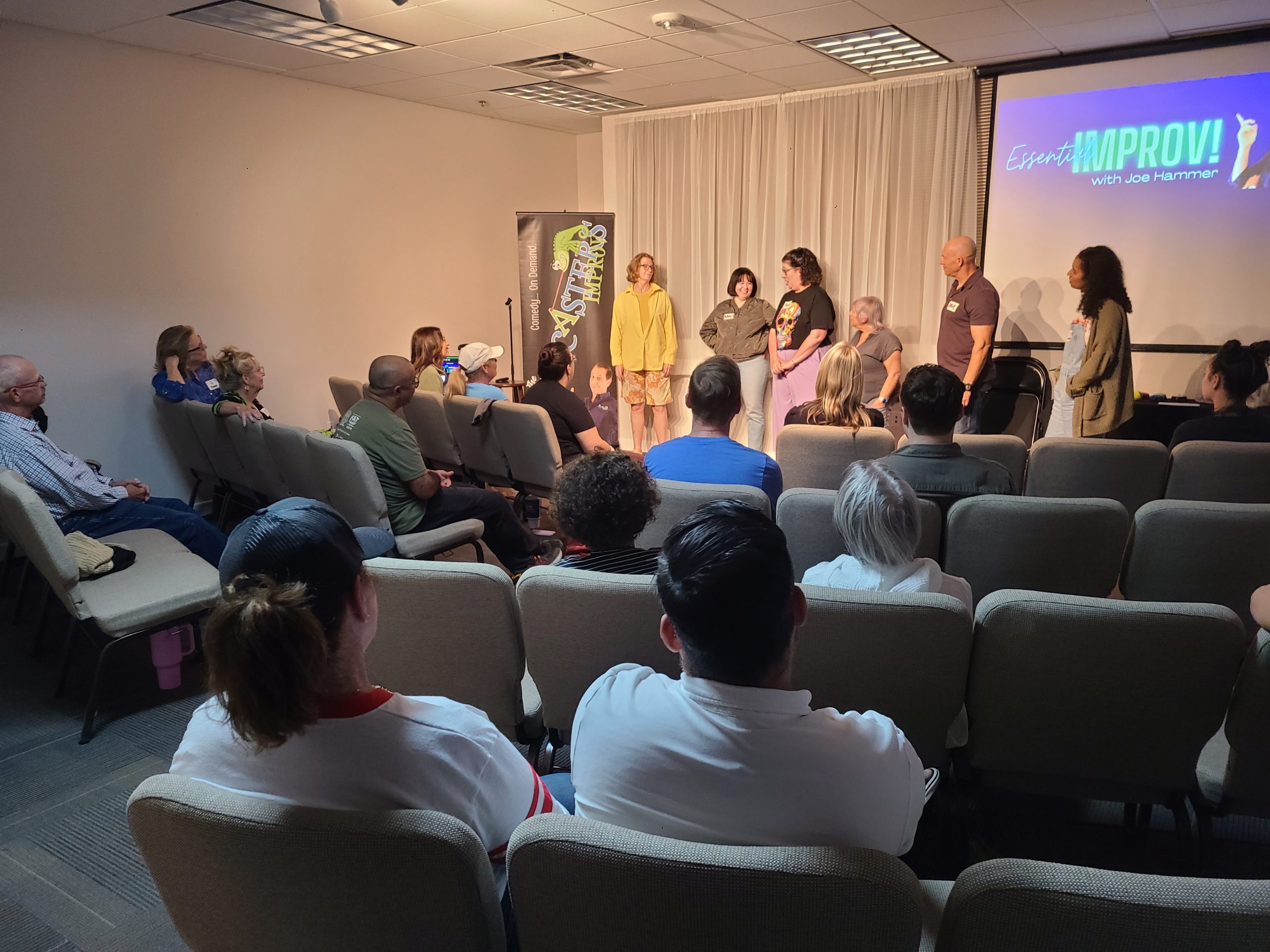
For leaders planning an offsite, department meeting, or change initiative, this is where hands-on communication practice can help. Programs from Your Improv Coach are designed to strengthen the listening, adaptability, confidence, and collaborative problem solving that make productive working sessions possible when the pressure is real.
The next time your team gathers to solve a difficult problem, resist the urge to ask for ideas and hope for magic. Give them a meaningful question, a focused process, and permission to think out loud. Then help them turn the best thinking in the room into a next step people can actually take.

As founder of The Outcasters Improv Training Center and YourImprovCoach.com, Joe Hammer has spent years helping forward-thinking organizations build real skills in listening, collaboration, and adaptability under pressure through interactive, improv-based training. His engagements often open with a high-energy presentation on using principles of improv in effective business communication, a great way to set the tone at a conference, offsite, or leadership summit, before teams move into hands-on training.