Communication Confidence Training for Employees
A capable employee can lose the room in 30 seconds. A question from a senior leader catches them off guard. A client changes direction mid-call. A teammate pushes back in a meeting. The employee knows the work, but hesitates, overexplains, or retreats into silence.
That is where communication confidence training employees can put to work matters. The goal is not to turn everyone into the loudest person in the room. It is to help people listen, think, respond, and speak with enough clarity that work keeps moving when the conversation gets unpredictable.
Confidence Is a Workplace Performance Skill
Communication confidence is often mistaken for personality. The assumption is that outgoing people have it and quieter people do not. In practice, confidence is a set of behaviors that can be practiced: staying present when a conversation changes, asking a useful question instead of making an assumption, stating a recommendation clearly, and recovering when the first answer is not perfect.
Those behaviors affect far more than presentations. They show up when an account manager handles a concerned customer, when a new supervisor gives feedback, when a project team needs a decision, and when an executive has to explain a difficult change. Employees who communicate with confidence do not eliminate uncertainty. They make uncertainty easier for others to navigate.
For business leaders, the cost of low confidence is familiar. Meetings run long because nobody names the real issue. Strong ideas arrive late because employees do not feel ready to contribute. Managers soften necessary feedback until the message is unclear. Customer-facing teams sound scripted when a conversation moves beyond the expected talking points.
A lecture about “speaking up” rarely fixes this. People need a low-risk place to practice the moments that normally make them freeze.
What Communication Confidence Training Employees Need Looks Like
The most effective communication training is active, business-relevant, and built around the situations people actually face. Participants should not spend a day passively taking notes about confidence. They should practice making decisions, responding to changing information, listening for what matters, and communicating a clear next step.
That approach matters because confidence grows through evidence. Each time an employee successfully handles an unfamiliar prompt, contributes to a fast-moving discussion, or reframes a difficult response, they gain proof that they can handle the next one.
A strong program typically develops several connected capabilities.
Speak with clarity, not more words
When people are nervous, they often add too much context, qualify every statement, or bury their recommendation beneath details. Training helps employees organize their thoughts quickly and communicate the point their audience needs first.
Clarity is not about being blunt. It is about recognizing whether the moment calls for a recommendation, a question, an update, or a decision. A finance leader may need concise information before approving a plan. A frustrated client may need to feel heard before they are ready to discuss options. The right response depends on the audience and the stakes.
Listen for the opportunity inside the response
Confident communicators are not simply waiting for their turn to talk. They listen closely enough to notice a concern, an unstated need, or a useful opening for collaboration.
This is especially valuable in cross-functional work. Sales may hear a customer request differently than operations. Product may focus on feasibility while marketing focuses on audience impact. Better listening does not mean everyone agrees immediately. It means employees can respond to what was actually said rather than defending a position they assumed was under attack.
Stay composed when plans change
The prepared presentation is only part of the job. The more revealing moment is the unexpected question, the missing data point, the objection from a stakeholder, or the sudden shift in priorities.
Communication confidence training gives employees repeated practice in responding without panic or defensiveness. They learn that a pause is acceptable, that a thoughtful question can buy useful time, and that they do not need a perfect script to be credible. This is a major advantage for teams working through growth, change, customer pressure, or organizational complexity.
Contribute without competing for airtime
Some workplaces have a confidence problem that looks like a participation problem. A few people dominate every discussion while others hold back, even when they have valuable insight. Training can create better habits around contribution, response, and shared problem solving.
The aim is not forced participation or performative enthusiasm. It is a team culture where employees know how to enter a conversation constructively, build on useful ideas, and disagree without shutting the room down.
Why Experiential Practice Produces Better Results
Employees can understand communication concepts and still struggle to use them under pressure. That gap is why active practice matters.
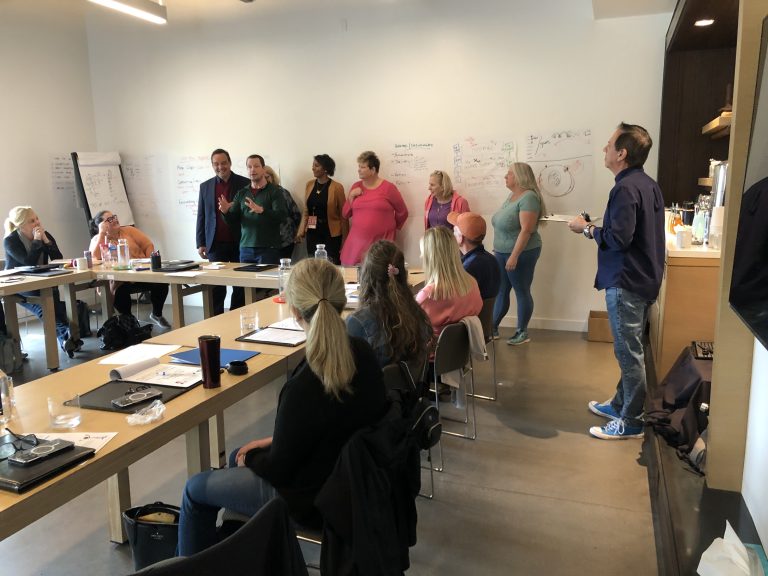
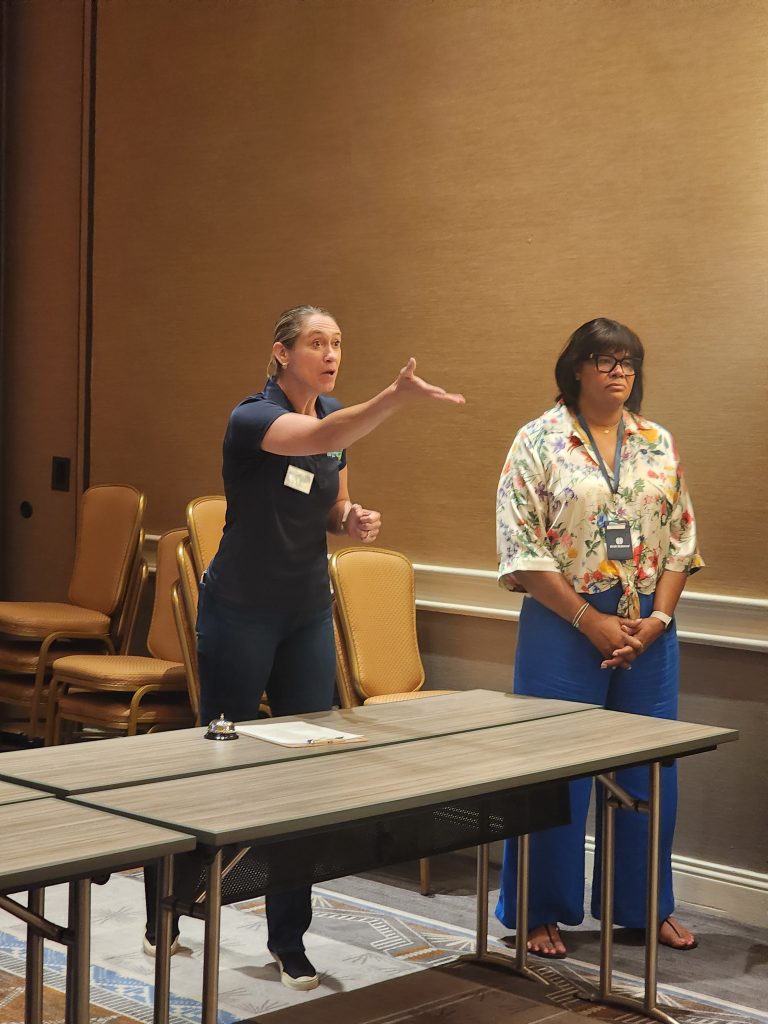
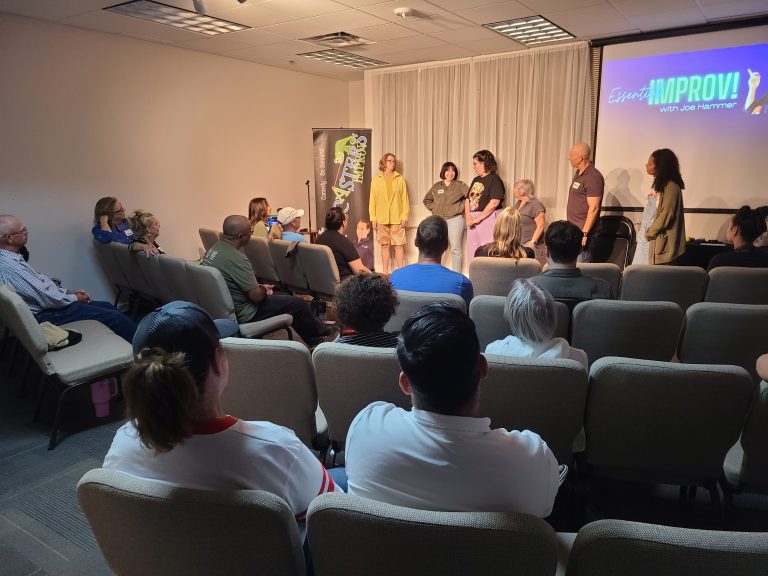
Improvisation-based business training creates realistic communication pressure without the real-world consequences of getting it wrong in front of a client or executive team. Participants work through unfamiliar scenarios, receive immediate feedback, and try again. The experience is engaging, but the purpose is serious: develop repeatable workplace behaviors.
This format is particularly effective for employees who have heard the usual advice before. They already know they should listen more carefully, communicate more clearly, and remain flexible. What they often lack is practice applying those expectations when the answer is not obvious.
Your Improv Coach uses interactive training to turn those moments into practical rehearsal. The work is not about teaching employees to perform comedy. It is about helping professionals show up with greater presence, adaptability, and influence when conversations matter.
Where Confidence Training Has the Greatest Impact
Every organization communicates differently, so training should be designed around the situations that create the most friction. A customer service team may need more confidence handling emotional conversations. A leadership group may need to improve directness and alignment during high-stakes decisions. A technical team may need to explain complex work to nontechnical stakeholders.
Newer employees often benefit from practicing how to contribute in meetings, ask better questions, and present ideas without over-apologizing. Managers need a different level of practice. They may need to address performance concerns, lead through ambiguity, or keep a team focused when emotions rise.
There are trade-offs to consider. A large conference keynote can build shared language and energy across an organization, but it will not provide the same depth of individual practice as a smaller workshop. A short team session can surface immediate communication habits, while a longer program gives participants time to apply feedback, reflect, and reinforce new behaviors. The right format depends on the goal, participant group, and business challenge.
How Leaders Can Make the Training Stick
A high-energy workshop can create momentum. Lasting change requires managers to reinforce the behaviors that were practiced once employees return to work.
Leaders do not need to turn every meeting into a training exercise. They can create follow-through by asking better questions. After a client call, ask what the team heard beneath the request. After a difficult meeting, ask where the conversation became unclear and what could be said more directly next time. When someone handles an unexpected challenge well, name the behavior specifically.
It also helps to make room for productive imperfection. If employees believe every comment must be flawless, they will wait too long to contribute. Teams improve when people can test an idea, receive input, adjust their thinking, and continue the conversation without embarrassment.
Managers set the tone here. A leader who reacts badly to a tough question teaches caution. A leader who listens, responds thoughtfully, and invites perspective teaches confidence by example.
Choose Training That Respects the Work
Employees can spot generic team-building quickly. If an activity feels disconnected from their daily responsibilities, they may enjoy the break but dismiss the lesson. Communication confidence training should respect participants’ intelligence and connect every exercise to a recognizable business need.
Before selecting a program, decision-makers should be able to answer a few practical questions: What communication moments are currently costing us time, trust, or momentum? Who needs the training most? What should participants be able to do differently the following week? How will managers reinforce those behaviors?
The answers shape the program. A session for a sales organization should not look exactly like one for healthcare administrators, engineers, or senior executives. The underlying communication skills may overlap, but the examples, pressure points, and desired outcomes should fit the audience.
Employees do not need more pressure to sound confident. They need meaningful practice, useful feedback, and leaders who reward clear thinking over perfect wording. Give people that environment, and the next difficult conversation becomes less of a test and more of a chance to move the work forward.
Give your employees that kind of practice environment. The Outcasters’ corporate improv training builds communication confidence through hands-on, low-risk practice.

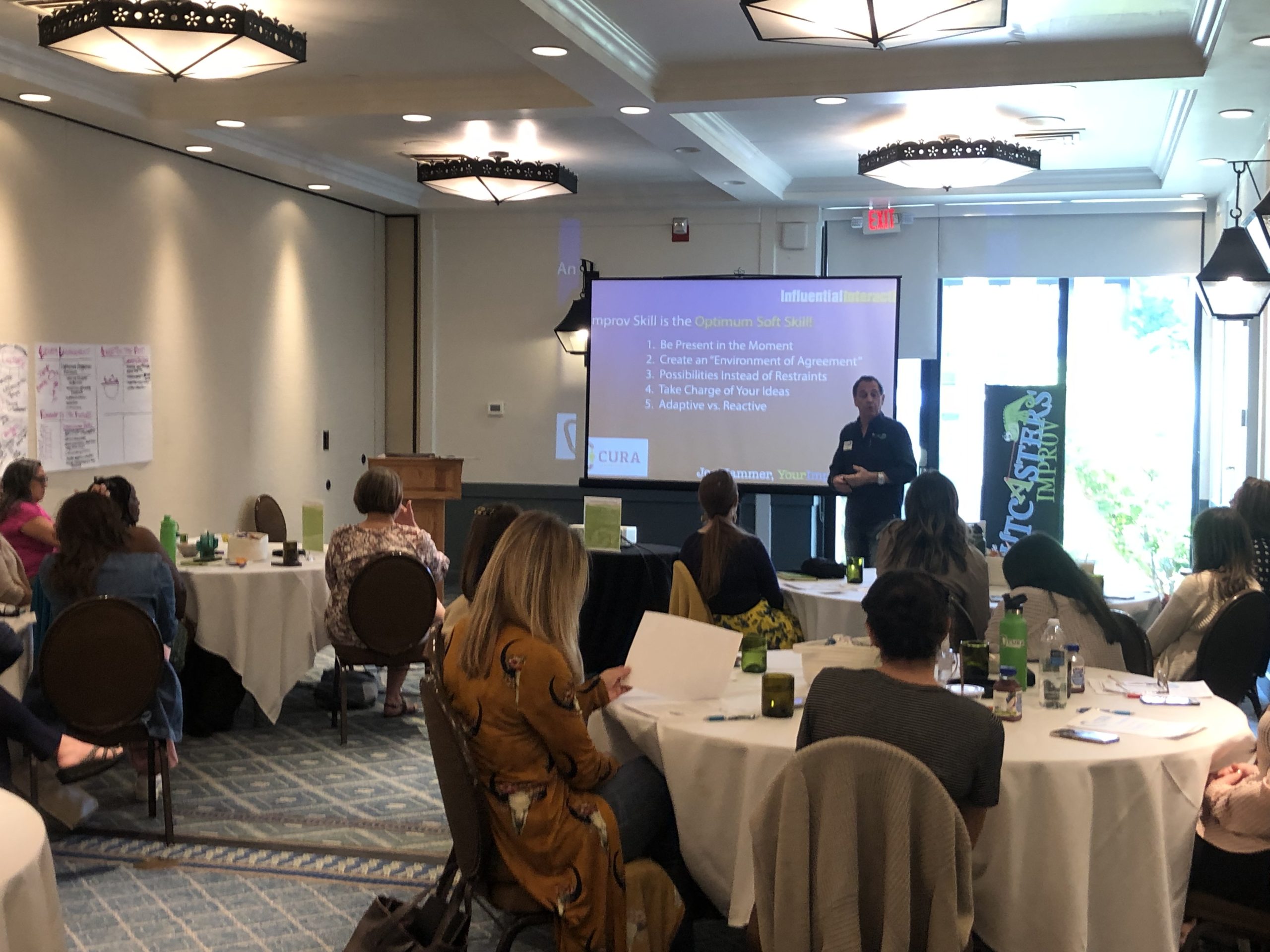
As founder of The Outcasters Improv Training Center and YourImprovCoach.com, Joe Hammer has spent years helping forward-thinking organizations build real skills in listening, collaboration, and adaptability under pressure through interactive, improv-based training. His engagements often open with a high-energy presentation on using principles of improv in effective business communication, a great way to set the tone at a conference, offsite, or leadership summit, before teams move into hands-on training.