Psychological Safety Workshop Guide for Teams
A project update goes sideways. A newer employee sees the problem first but stays quiet. A manager asks, “Any concerns?” and receives a room full of polite agreement – until the real conversation starts after the meeting.
That is the moment a psychological safety workshop guide needs to address. Psychological safety is not about making work comfortable all the time or avoiding direct feedback. It is about creating a team environment where people can raise concerns, test ideas, ask for clarity, admit mistakes, and disagree professionally without fearing embarrassment or retaliation.
For business leaders, HR teams, and L&D professionals, the goal is not a pleasant afternoon of team-building. The goal is better information moving through the organization when timing, customer expectations, and decisions are on the line.
What a psychological safety workshop should change
A useful workshop gives people more than a definition. It changes what they do in the moments that usually shut communication down: when a senior leader is in the room, when someone has a different opinion, when a conversation gets tense, or when an employee is unsure whether a question will make them look unprepared.
The strongest programs focus on observable behaviors. Teams learn to listen without loading the next response, clarify what they heard, contribute ideas before they are fully polished, and respond constructively when someone brings forward a risk. Leaders practice making room for candor without losing standards, pace, or accountability.
That distinction matters. A team can be friendly and still avoid conflict. It can be highly accountable and still make people reluctant to speak. Psychological safety and high performance work together when people are expected to be honest, prepared, respectful, and willing to learn.
Start with the business disruption, not a slogan
Before choosing exercises or scheduling a session, identify where silence is costing the team. Generic objectives produce generic results. A better starting point is a real workplace pattern that leaders want to change.
Maybe sales and operations are making assumptions instead of clarifying handoffs. Maybe managers receive bad news too late. Maybe a leadership team debates ideas privately but becomes overly agreeable in executive meetings. Maybe customer-facing employees need more confidence when conversations suddenly change direction.
Ask department leaders three practical questions: Where do people hold back? What is the cost when they do? What would a better response sound or look like?
The answers create a useful workshop brief. “Improve psychological safety” becomes “surface customer risks earlier in weekly account reviews” or “help managers invite dissent before finalizing a cross-functional decision.” That gives facilitators, participants, and sponsors something concrete to work toward.
Do not confuse safety with consensus
Teams sometimes resist this work because they worry it will lower the bar for performance. Make the expectation clear at the outset: people do not have to agree, and every idea will not be adopted. They do need to participate in a way that makes better thinking possible.
A healthy team can say, “I see a risk in that plan,” “I need more context,” or “I disagree with the assumption,” without turning the room defensive. It can also say, “We heard the concern, made the decision, and now we move together.” That is not softness. That is disciplined communication.
Design the workshop around practice
Lectures can explain psychological safety. They rarely build the reflexes required when pressure rises. Participants need structured opportunities to experience a familiar communication challenge, try a better response, receive feedback, and try again.
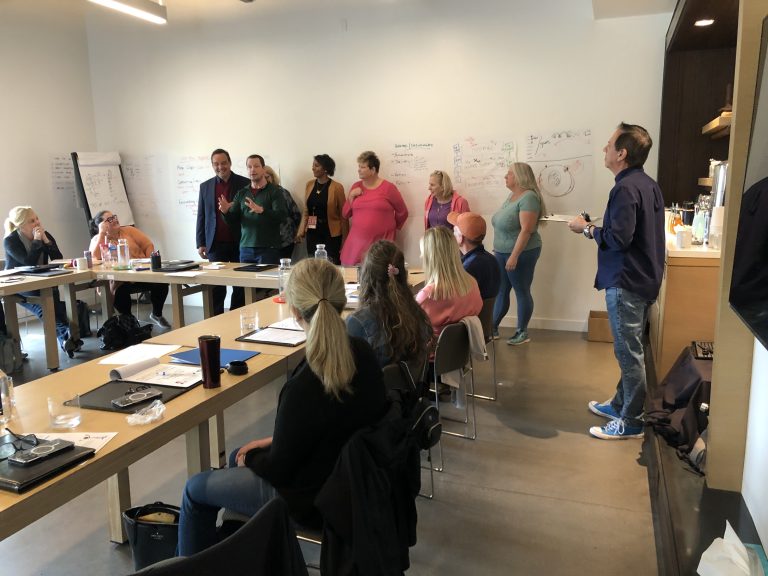
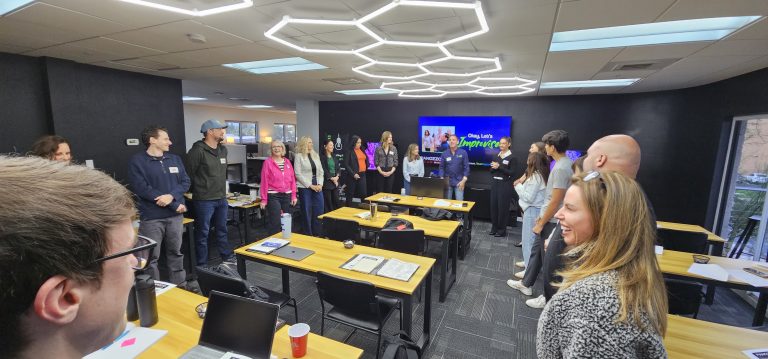
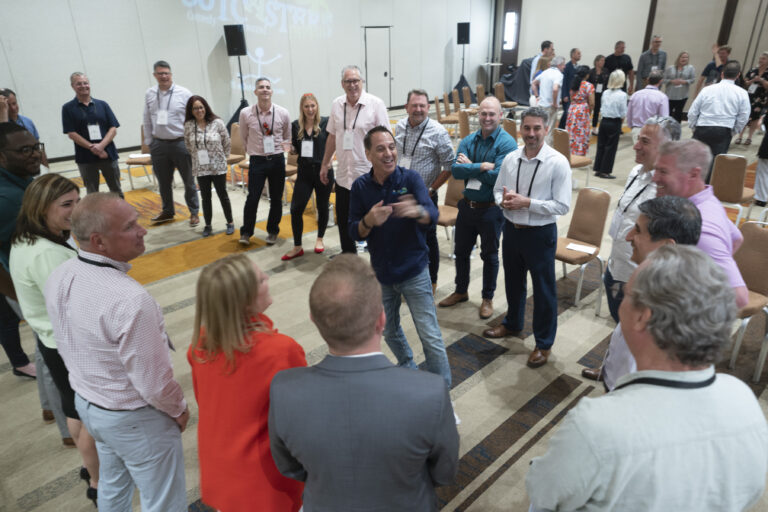
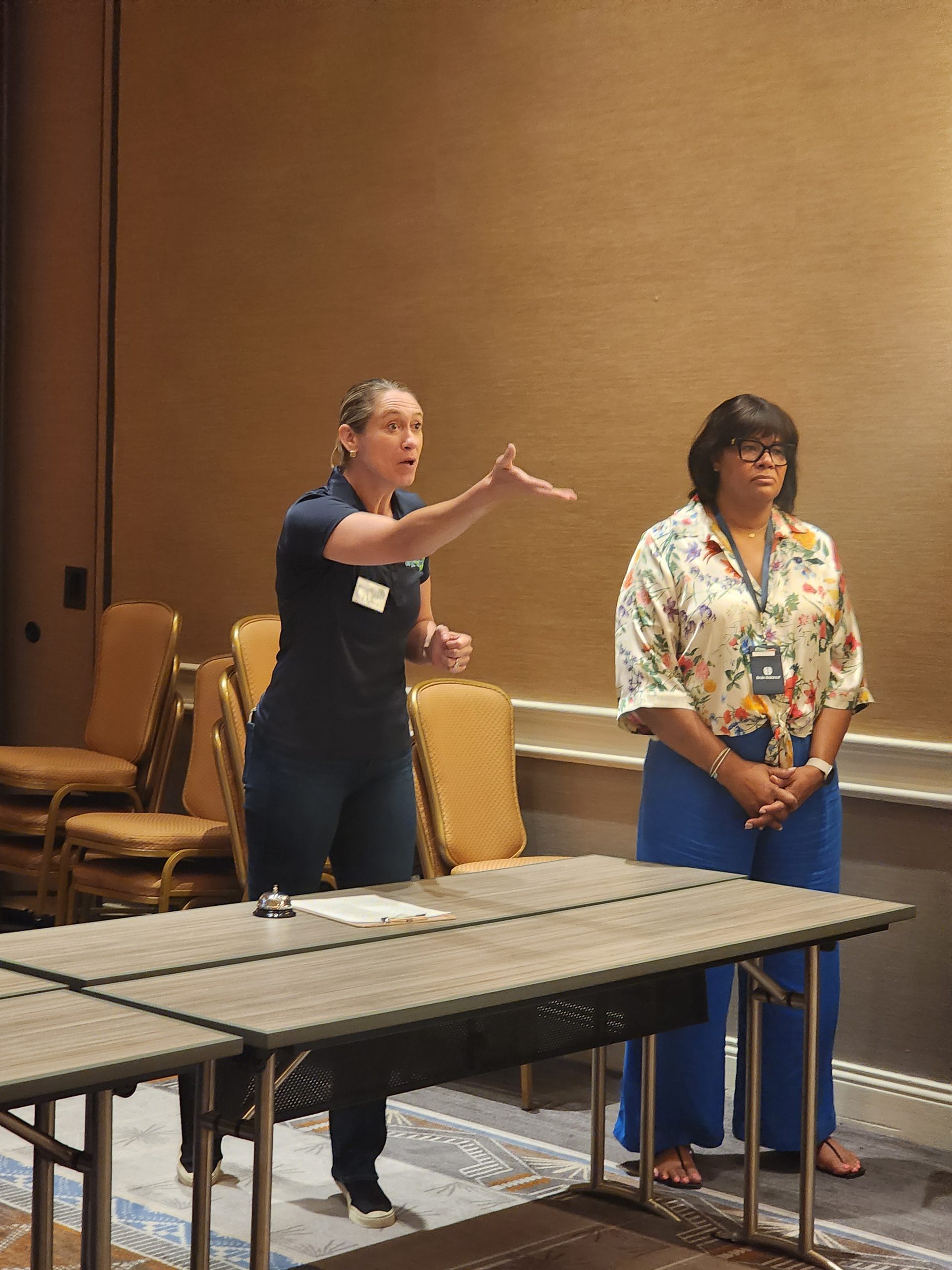
This is where active, improvisation-based training has a practical advantage. It puts professionals into short, low-risk scenarios that mirror the uncertainty of business: incomplete information, changing priorities, conflicting viewpoints, unexpected questions, and the need to respond in real time. The purpose is not to teach comedy. It is to build stronger habits of attention, collaboration, composure, and communication.
At Your Improv Coach, that business-first approach helps teams connect active learning to the conversations they need to have on Monday morning. A well-designed session should feel energetic, but participants should never be left wondering how the experience applies to their work.
A productive workshop usually moves through three stages. First, participants see the communication patterns that limit contribution. Next, they practice specific behaviors in increasingly realistic situations. Finally, they translate those behaviors into team agreements and meeting routines.
Keep the scenarios relevant. A finance team may need to challenge forecasts without making a colleague defensive. A healthcare leadership group may need to escalate concerns across roles. A product team may need to question a rushed launch decision. Relevance makes practice credible.
Give leaders a visible role
Leaders set the conditions long after the workshop ends. If a vice president asks for input but interrupts the first dissenting voice, employees learn quickly which message to believe. If a manager treats a missed assumption as a learning opportunity, people are more likely to raise the next one before it becomes expensive.
Leadership participation should be active, not ceremonial. Managers and executives need practice with the behaviors they expect from others: asking open questions, acknowledging useful challenge, separating a person from an idea, and admitting when they do not yet have an answer.
They also need to understand the trade-off. Inviting more input can initially make meetings feel slower. It may expose disagreement that was previously hidden. But hidden disagreement does not disappear. It typically resurfaces as rework, weak execution, delayed escalation, or passive resistance.
A leader does not need to accept every recommendation. They do need to show how input was considered. A simple response such as, “That concern changed how we will approach the rollout,” reinforces participation. So does, “I am choosing a different path because of this constraint, but I want you to keep raising issues like this.”
Build the right conditions before people take risks
Psychological safety cannot be demanded. It is earned through repeated interactions. Workshop facilitators should establish clear participation expectations, especially when teams include mixed levels of authority or existing tension.
Start by defining productive participation. Encourage directness, curiosity, confidentiality where appropriate, and respect for different working styles. Make it clear that challenging an idea is welcome, while personal attacks, side conversations, and dismissive behavior are not.
Then structure participation so the loudest people do not set the entire agenda. Small-group work, rotating roles, written reflection before discussion, and timed rounds can help quieter participants organize their thoughts. These techniques are not about forcing introverts to perform. They are about making sure the team has access to the information they carry.
Be thoughtful with vulnerability exercises. Asking people to share deeply personal stories is rarely necessary for a business workshop and can feel performative. The most useful vulnerability is work-relevant: naming uncertainty, requesting help, owning an error, or saying that a decision needs another look.
Turn workshop learning into meeting habits
A single session can create momentum. It will not override months or years of entrenched behavior without follow-through. The real test happens in staff meetings, project reviews, one-on-ones, and high-stakes conversations.
Choose two or three habits the team will use immediately. For example, begin major decisions by asking what might be missing. Assign someone to surface risks or alternative viewpoints. Close meetings by confirming unresolved questions, ownership, and what information needs to be shared next.
Managers can reinforce the shift in one-on-ones by asking, “What are you seeing that the team may not be seeing?” They can also reward early escalation. When someone raises a concern that turns out not to be a major issue, thank them for speaking up anyway. Otherwise, employees learn they must be perfectly correct before they contribute.
Follow-up matters most after a difficult exchange. If a conversation became tense, do not pretend it did not happen. Briefly name what worked, what could have been handled better, and how the team will approach the next discussion. That response teaches more than a poster on the wall ever will.
Measure behavior, not just satisfaction
Post-workshop surveys can tell you whether participants found the experience engaging and relevant. That is useful, but it is not enough. Look for signs that communication is changing in the work itself.
Track whether project risks surface earlier, whether more people contribute in key meetings, whether handoff errors decline, and whether managers report better-quality questions and escalation. For some teams, pulse questions can reveal whether employees feel able to ask for help, challenge a decision, or acknowledge a mistake.
Context matters. A team dealing with a major reorganization may need more time and consistent leadership reinforcement before trust improves. A newer team may progress quickly because habits are not yet fixed. Measure trends over time rather than expecting one workshop to solve every cultural issue.
The best closing thought for any team is simple: make it easier to tell the truth while there is still time to act on it. When people can speak with candor, listen with discipline, and respond without defensiveness, better work has room to happen.

As founder of The Outcasters Improv Training Center and YourImprovCoach.com, Joe Hammer has spent years helping forward-thinking organizations build real skills in listening, collaboration, and adaptability under pressure through interactive, improv-based training. His engagements often open with a high-energy presentation on using principles of improv in effective business communication, a great way to set the tone at a conference, offsite, or leadership summit, before teams move into hands-on training.