Influence Skills Training Leaders Can Use Daily
A major client changes direction halfway through a meeting. A senior leader challenges the recommendation your team spent weeks preparing. Two departments agree on the goal but cannot agree on who owns the next move. These are not presentation problems. They are influence moments. Influence skills training leaders need should prepare people to respond with clarity, calm, and credibility when the conversation stops following the script.
For business leaders, influence is not about having the loudest voice in the room or finding the perfect argument. It is the ability to help people understand what matters, feel heard, and commit to productive action. That takes more than a slide deck, a strong title, or a persuasive personality. It takes practice handling the live, unpredictable exchanges where trust is either strengthened or lost.
Why influence breaks down when the stakes rise
Most professionals can explain their ideas when conditions are comfortable. The real test arrives when priorities conflict, emotions surface, or a decision must be made before every detail is known. Under pressure, people often fall into familiar habits: talking faster, defending their position, overexplaining, or withdrawing completely.
Those habits create friction. A manager may believe they are being decisive while the team experiences them as dismissive. A subject-matter expert may offer valuable insight but bury it under too much detail. A newer employee may have the right observation and never say it because a more forceful voice takes over.
The cost is larger than one awkward meeting. Decisions slow down, handoffs become unclear, and capable people stop contributing what they see. Teams can become polite on the surface while avoiding the conversations that would actually move the work forward.
Effective influence starts with a different standard: Can you stay present enough to understand what is happening, adapt your message, and guide the next useful step? That is a skill set, and skill sets can be practiced.
What influence skills training for leaders should build
Training should not ask leaders to copy someone else’s style. An introverted operations leader, an energetic sales director, and a thoughtful HR executive can all be influential. The objective is to make each person more intentional, responsive, and clear in the moments that matter.
Listen for the real concern
People rarely state every concern directly. “I need more information” may mean “I do not see the risk being addressed.” “This is not a priority” may mean “My team does not have the capacity.” If leaders listen only for the words, they may answer the wrong question and create more resistance.
Practical training helps participants hear both the stated issue and the need behind it. That does not mean agreeing with every objection. It means responding to the actual concern before trying to advance a recommendation. When people feel accurately understood, they are far more likely to engage in a solution.
Make the message easy to act on
Influence weakens when a message is technically correct but difficult to follow. Leaders need to state the purpose, the decision required, and the next action without overwhelming the room with background information.
Clarity is especially important in cross-functional work. Finance, operations, sales, and technology may use different language and measure success differently. A leader who can translate an idea into terms each group can use creates alignment without watering down the issue.
Respond productively when challenged
A challenging question is not automatically opposition. It may be a chance to clarify assumptions, identify a gap, or bring a quieter stakeholder into the conversation. Leaders who treat every challenge as a threat tend to become defensive. Leaders who can pause, acknowledge the point, and respond thoughtfully show confidence without becoming rigid.
This is where active practice matters. Reading about composure does not create composure. Participants need realistic opportunities to field objections, recover from incomplete answers, and adjust their approach in the moment. The goal is not a flawless response. The goal is a useful response that keeps the conversation moving.
Create commitment, not just agreement
A room can nod along and still leave with no ownership. Influence includes confirming what happens after the meeting: who will do what, by when, and what support or decision is still needed.
That follow-through is a leadership behavior. It turns a good conversation into a coordinated action. It also prevents teams from revisiting the same decision because expectations were never made explicit.
Why lecture-only training falls short
A lecture can introduce a framework, but it cannot show a leader how they react when someone interrupts, changes the premise, or questions their authority. Influence happens in interaction. Training must do the same.
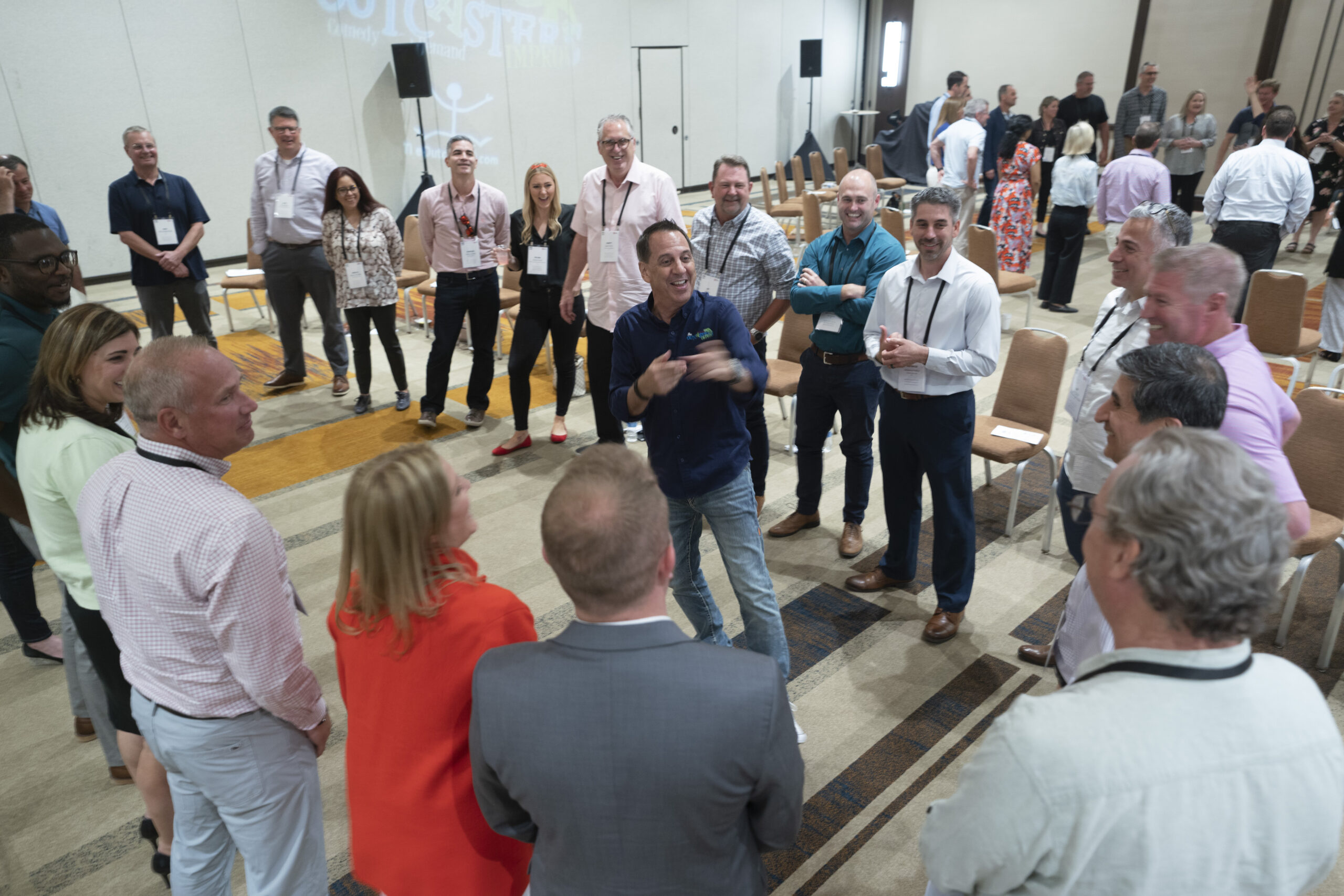
Interactive, business-focused practice gives participants a low-risk place to test new responses. They can notice how their language lands, receive direct feedback, and try again before the stakes are real. The learning becomes memorable because it is experienced, not merely understood.
That is the value of an improvisation-based approach when it is designed for business outcomes rather than performance. The work is not about being funny or putting employees on the spot. It is about building practical flexibility, active listening, concise communication, and confidence under pressure.
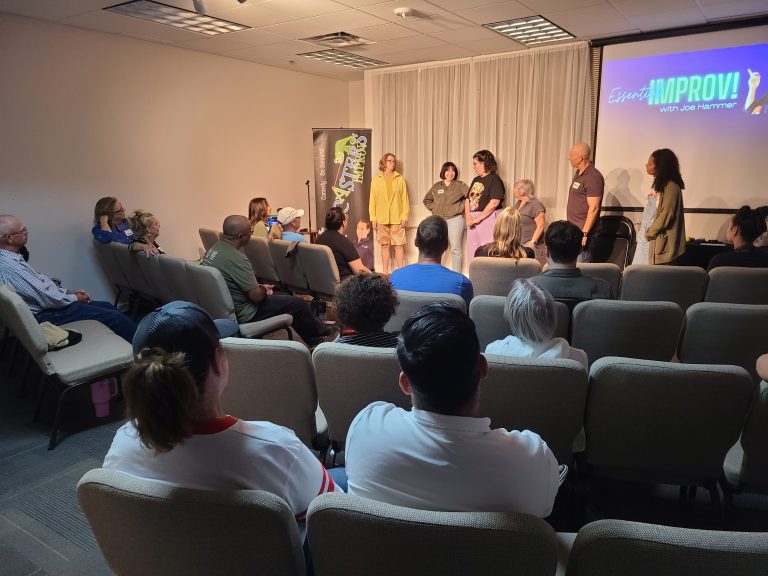
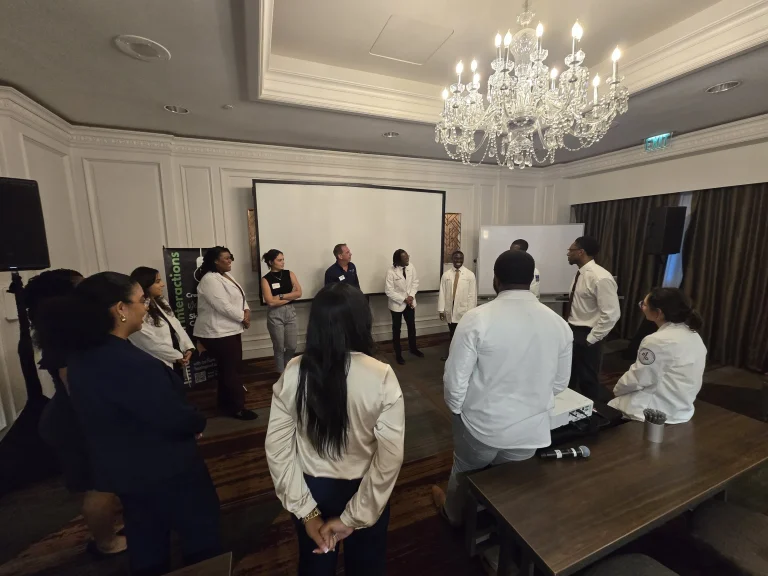
I use this kind of hands-on practice in my Influential Interactions training programs to help teams work through the interactions that commonly derail momentum: difficult stakeholder conversations, shifting customer needs, presentations that take an unexpected turn, and meetings where no one is sure how to regain focus. Participants build the habit of responding constructively rather than freezing, forcing, or fading out.
Influence skills training leaders can apply immediately
The strongest programs connect practice to the situations participants will face on Monday morning. For executives, that may mean communicating a difficult strategic shift without creating confusion. For managers, it may mean giving direct feedback while maintaining trust. For client-facing teams, it may mean moving a skeptical buyer from hesitation to a productive next conversation.
Before choosing a program, define the business behaviors that need to change. “Improve communication” is a worthy goal, but it is too broad to guide practice. A more useful objective might be helping managers ask better questions during conflict, helping project leads gain faster alignment across departments, or helping emerging leaders speak with confidence in senior-level meetings.
The format should also fit the team. A leadership offsite may allow for deeper scenario work and reflection. A conference keynote may focus on shared language and immediately usable techniques for a larger audience. A department workshop can center on recurring communication breakdowns within that group. The right choice depends on the audience, the urgency of the challenge, and how much opportunity participants need to practice.
How to reinforce the learning after the session
Training has more impact when leaders carry it into regular work. Teams do not need a complicated reinforcement campaign. They need a few visible expectations that make better influence part of how they operate.
Managers can ask, “What concern are we really hearing?” before responding to a stakeholder. Meeting owners can end key discussions by confirming the decision, owner, and next step. Senior leaders can model curiosity when challenged instead of immediately defending a position. These small choices send a powerful message about what productive communication looks like.
It also helps to make reflection specific. After a customer call, project meeting, or difficult conversation, ask what created momentum, where the message became unclear, and what response might work better next time. Reflection should not become blame. Its purpose is to turn everyday interactions into useful practice.
Better influence creates better work
When leaders communicate with greater presence and flexibility, teams spend less time recovering from misunderstandings. People raise concerns earlier. Meetings produce clearer decisions. Employees with different styles and levels of authority contribute more fully because the conversation has room for them.
That does not mean every conversation becomes easy. Some decisions will still involve disagreement, constraints, and competing priorities. Strong influence does not erase tension. It helps leaders use tension productively, so the team can address what is real and move forward with greater trust.
The next high-pressure conversation is already on the calendar. Treat it as more than a communication test. It is a chance to listen well, make the path clearer, and give others a reason to move with you.
Ready to build these influence skills into your leadership team? Explore The Outcasters’ corporate improv training for hands-on sessions built around your team’s real challenges.

As founder of The Outcasters Improv Training Center and YourImprovCoach.com, Joe Hammer has spent years helping forward-thinking organizations build real skills in listening, collaboration, and adaptability under pressure through interactive, improv-based training. His engagements often open with a high-energy presentation on using principles of improv in effective business communication, a great way to set the tone at a conference, offsite, or leadership summit, before teams move into hands-on training.