7 Improv Training Benefits for Better Teams
A client changes direction halfway through a meeting. A key presenter is out sick. A customer asks a question nobody expected. These are not rare exceptions in business. They are the moments that reveal whether people can think clearly together. The most valuable improv training benefits are not about becoming funnier or performing on a stage. They are about building the communication habits teams need when the script disappears.
For leaders, HR professionals, and event planners, that distinction matters. People do not need another passive session filled with advice they will forget by Friday. They need a safe, active way to practice listening, responding, contributing, and leading when conditions change. Well-designed improv-based business training gives them that practice.
Why Improv Training Benefits Business Performance
Most workplace problems do not begin with a lack of intelligence. They begin when people stop listening, protect their own ideas, freeze under pressure, or wait for perfect information before acting. Those reactions slow decisions, weaken customer conversations, and make change feel harder than it needs to be.
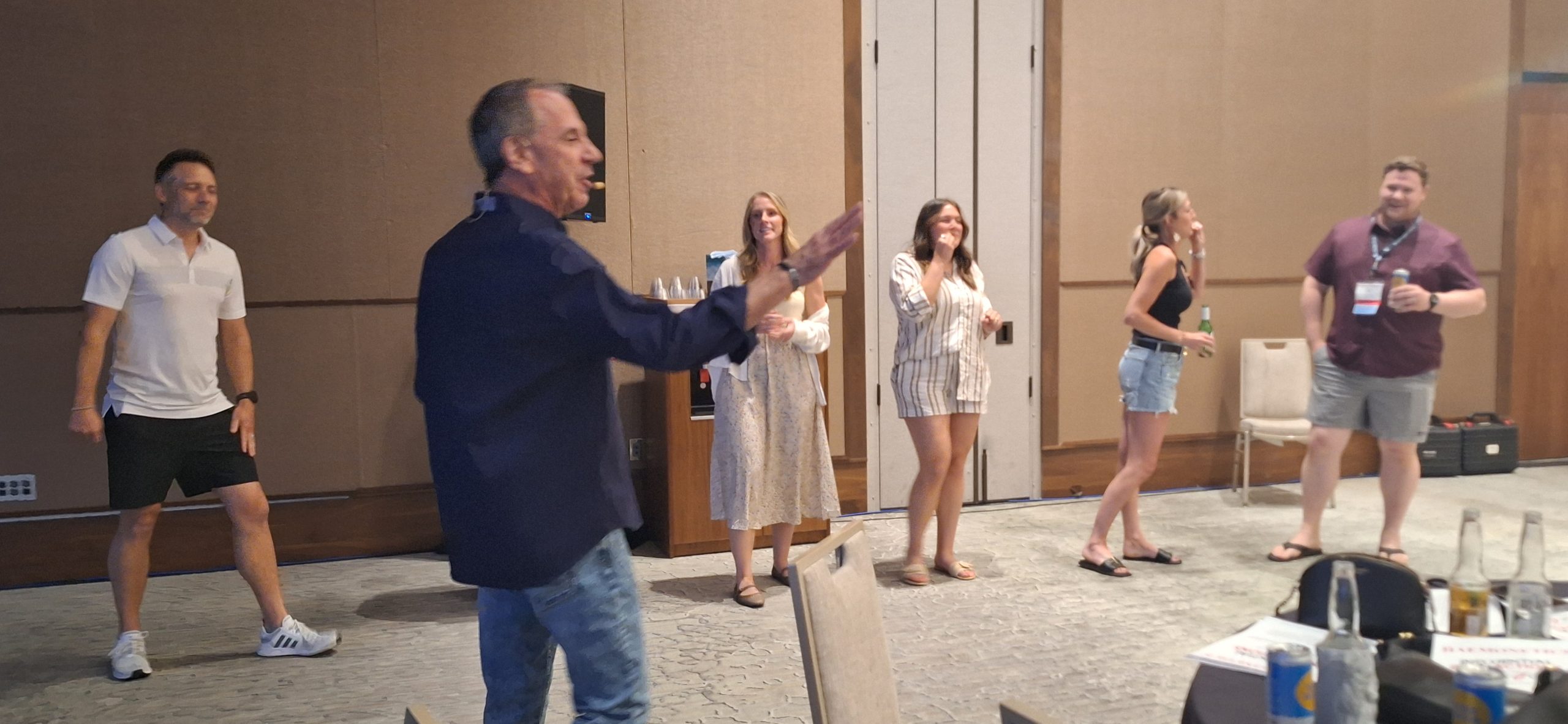
Interactive improv training puts participants into short, low-risk situations where those habits become visible. There is no time to hide behind polished talking points or familiar meeting routines. Participants must pay attention, communicate clearly, and support forward movement. Then they connect what happened in the exercise to the meetings, presentations, leadership conversations, and customer interactions they handle every day.
That transfer is the point. A corporate program should be engaging, but engagement alone is not an outcome. The real measure is whether people return to work better prepared to handle live, unpredictable business conversations.
1. Stronger Listening That Changes Conversations
Active listening is easy to praise and harder to practice. In a fast meeting, people often listen just long enough to prepare their own response. They may miss a concern from a client, overlook a useful contribution from a colleague, or answer a question that was never actually asked.
Improv-based exercises make attentive listening unavoidable. Participants quickly see the difference between reacting from assumption and responding to what another person actually said. That experience creates a practical shift: people become more curious, ask better follow-up questions, and catch details that affect the next decision.
For managers, this supports better one-on-ones and feedback conversations. For sales and service teams, it improves discovery and customer trust. For cross-functional groups, it reduces the costly cycle of clarification, correction, and rework.
2. Clearer Communication Without the Corporate Fog
When pressure rises, communication often gets longer, less direct, and more confusing. Teams use vague language, bury the main point, or assume everyone shares the same context. The result is delay disguised as discussion.
Training participants to communicate in the moment improves clarity because they must make their message understandable to another person right now. They learn to state an idea, build on the conversation at hand, and adjust when their first explanation does not land.
This is especially useful for professionals who know their subject matter but struggle to make it accessible. Technical experts, new managers, project leads, and executives all benefit from communicating with greater focus. Clear communication is not about sounding rehearsed. It is about helping others understand what matters and what happens next.
3. Faster Adaptation When Plans Change
A change in scope, staffing, budget, market conditions, or customer expectations can trigger hesitation. Some people become rigid. Others rush into action without aligning the group. Neither response helps a team move forward with confidence.
One of the most practical improv training benefits is repeated experience with uncertainty. Participants practice staying present when new information appears and choosing a productive response instead of treating a change as a personal disruption. Over time, this builds composure.
Adaptability does not mean accepting every last-minute request or abandoning thoughtful planning. Good planning still matters. The difference is that adaptable teams can revise their approach without losing momentum, morale, or their ability to communicate well.
4. More Productive Collaboration Across Roles
Collaboration breaks down when people compete for airtime, dismiss unfinished ideas, or protect their department’s point of view. A room can be full of talented people and still produce a weak solution if they do not know how to build together.
Experiential training changes the pattern by giving teams a shared language of contribution. Participants experience what happens when they acknowledge input, add useful information, and keep a conversation moving rather than trying to win it. The work becomes less about whose idea gets credit and more about what the group can create.
This matters most when teams cross functions. Marketing, operations, sales, finance, and leadership do not always see a problem through the same lens. That variety is valuable, provided the group can turn different perspectives into progress instead of friction.
5. Better Creative Thinking Under Real Constraints
Creative thinking is often treated as a separate activity, reserved for brainstorming sessions or innovation teams. In reality, most employees need it every time they solve a customer issue, reframe a proposal, work around a resource constraint, or find a better way to explain an idea.
Improv training helps people generate options without immediately judging every thought. That does not mean every idea is good, and it should not. Business decisions still require standards, evidence, and sound judgment. But teams need a moment of expansion before they move into evaluation.
The payoff is practical. Instead of reaching for the same familiar answer, people become more willing to offer alternatives, combine perspectives, and find a workable next step when the obvious route is blocked.
6. Greater Confidence in Presentations and High-Stakes Moments
Many professionals can present well when everything goes according to plan. The real test arrives when the technology fails, a senior leader interrupts, the audience looks confused, or a question changes the direction of the discussion.
Confidence comes from preparation, but it also comes from knowing you can recover. Improv-based practice develops that recovery muscle. Participants learn they can pause, listen, organize a response, and continue without pretending to have every answer immediately.
That is a more credible form of executive presence than forced certainty. Leaders who stay calm, acknowledge the moment, and guide the conversation forward earn trust. The same applies to employees presenting to clients, facilitating workshops, or speaking up in a meeting where the stakes feel high.
7. Composed Leadership When Pressure Is Contagious
Teams take emotional cues from their leaders. When a manager becomes defensive, scattered, or visibly rattled, the room tightens. When a leader remains focused and responsive, people are more likely to contribute useful information and keep working the problem.
Improv training gives leaders an opportunity to practice presence under manageable pressure. They notice their default reactions, strengthen their ability to respond rather than react, and become more intentional about how they bring others into a conversation.
This is not a substitute for leadership strategy, operational discipline, or subject-matter expertise. It is the interpersonal skill set that helps leaders use those strengths when the moment gets messy. For organizations navigating growth, change, or demanding customer expectations, that capability has real value.
Making the Training Stick After the Session
The strongest programs are tailored to the moments participants actually face. A sales team may need better customer listening. A leadership group may need to handle difficult conversations with more composure. A department preparing for a major change may need faster, more constructive collaboration.
That is why the design matters as much as the energy in the room. A customized workshop should connect exercises to specific workplace behaviors, give participants room to reflect, and provide language they can use the next time a meeting takes an unexpected turn. A keynote can create momentum at a conference or offsite, while a deeper workshop gives teams more repetition and application.
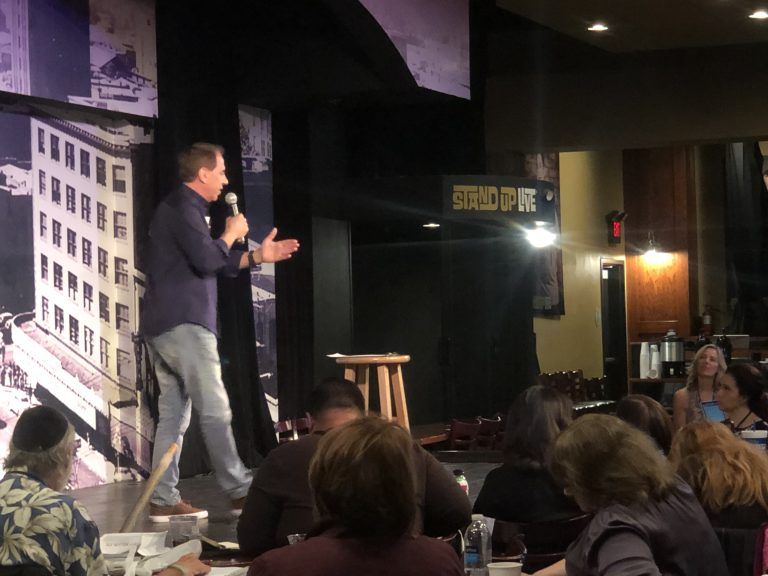
My Influential Interactions workshop approaches this work as business development, not entertainment. Humor helps people lower their guard and participate, but the objective stays fixed: help professionals listen better, adapt quickly, communicate clearly, and lead with confidence.
The next unplanned moment will not wait until everyone feels ready. Give your people a chance to practice before it arrives, so they can meet it with attention, clarity, and a useful next move.

As founder of The Outcasters Improv Training Center and YourImprovCoach.com, Joe Hammer has spent years helping forward-thinking organizations build real skills in listening, collaboration, and adaptability under pressure through interactive, improv-based training. His engagements often open with a high-energy presentation on using principles of improv in effective business communication, a great way to set the tone at a conference, offsite, or leadership summit, before teams move into hands-on training.