What Is Applied Improvisation in Business?
A client changes direction halfway through a meeting. A presentation deck will not load. Two departments have competing priorities, and everyone is waiting for someone else to make the next move. Those moments reveal what is applied improvisation at its most useful: practical training that helps people respond with clarity, confidence, and good judgment when the script disappears.
Applied improvisation is not comedy training disguised as a workshop. It is an active, structured way to build workplace skills through short, guided exercises and real-time practice. Participants learn to pay closer attention, communicate their ideas clearly, support productive collaboration, and stay composed when circumstances change.
For business leaders, HR professionals, and event planners, that distinction matters. The goal is not to make employees funnier. The goal is to help them perform better in conversations, presentations, customer interactions, decision-making moments, and high-pressure situations where prepared answers are not enough.
What Is Applied Improvisation?
Applied improvisation takes the responsiveness, awareness, and collaboration practiced in improv and puts them to work outside a stage setting. In a business environment, it gives people a safe place to rehearse the human skills that determine whether a meeting moves forward or stalls out.
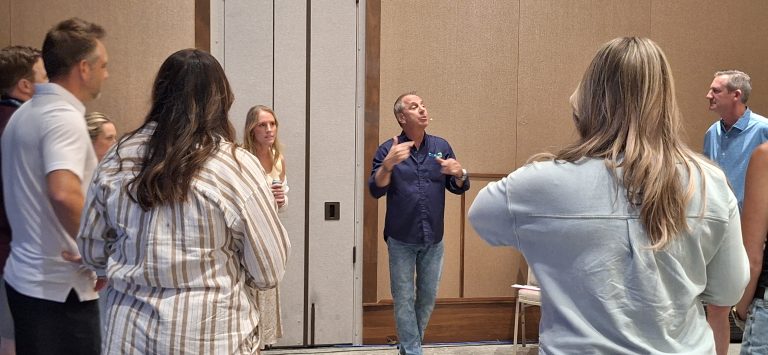
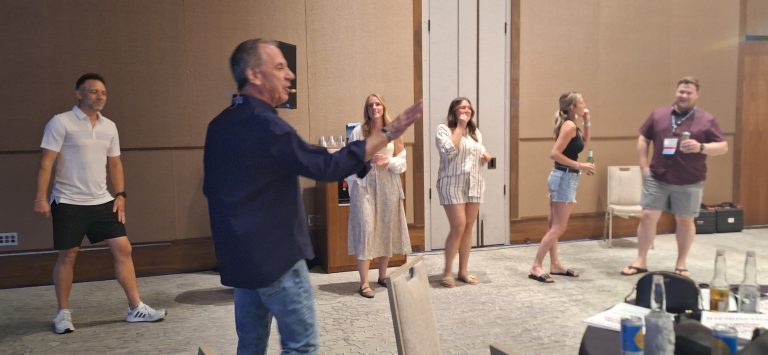
A well-designed session is active by design. People are not sitting through another slide deck about communication. They are noticing what happens when they listen for the full message instead of waiting for their turn to speak. They are practicing how to build on useful input, recover from an unexpected prompt, and communicate a point without overexplaining it.
That experience creates faster learning than theory alone. Most professionals already know they should listen, collaborate, and adapt. The harder question is whether they can do those things when a senior leader challenges an idea, a customer asks an unexpected question, or a team is under a tight deadline. Applied improvisation closes the gap between knowing and doing.
Why Business Teams Need More Than Prepared Scripts
Preparation is valuable. Teams should prepare for presentations, negotiations, performance conversations, and important customer meetings. But even excellent preparation has limits because business interactions are live. People react differently than expected. Information changes. Priorities shift. Technology fails. A difficult question arrives with no warning.
When people rely too heavily on a script, they can become rigid. They may miss what the other person is actually saying, defend an outdated plan, or freeze while trying to find the perfect response. The result is often slower decisions, strained relationships, and less confidence in the room.
Applied improvisation trains a different response: stay present, assess what is happening, and move the conversation forward. That does not mean reacting carelessly or speaking without thought. It means becoming more capable of thinking with others in real time.
For leaders, this capability is especially visible during change. Employees watch how leaders handle incomplete information, challenging questions, and unexpected setbacks. A composed leader does not need to have every answer immediately. They need to listen well, communicate honestly, involve the right people, and give the group a constructive next step.
The Workplace Skills Applied Improvisation Builds
The best business training connects directly to behaviors people can use the same day. Applied improvisation is particularly effective because it puts those behaviors into motion rather than leaving them as concepts on a handout.
Stronger listening and clearer communication
Many workplace misunderstandings are not caused by a lack of intelligence or effort. They happen because people hear the first part of a message, make an assumption, and respond to what they expected instead of what was said.
Applied exercises make listening visible. Participants quickly recognize when they are interrupting, filling in gaps, or missing a colleague’s point. With practice, they become more deliberate about asking useful questions, acknowledging what they heard, and responding to the actual issue. That leads to clearer handoffs, more productive meetings, and fewer costly do-overs.
More productive collaboration
Collaboration is not simply putting smart people in the same room. Teams need to contribute ideas, make room for different perspectives, and keep momentum when there is disagreement. That is hard when people are protecting their own solution or trying to win every exchange.
Applied improvisation gives teams repeated practice in shared problem solving. Participants experience how quickly a group can lose traction when ideas are dismissed too early, and how much more useful a conversation becomes when people contribute with attention and purpose. The takeaway is practical: better collaboration comes from how people respond to one another, not just from who attends the meeting.
Adaptability under pressure
Change is no longer a special event for most organizations. It is part of the operating environment. New priorities, reorganizations, customer demands, and market conditions require employees to adjust without losing focus.
Practice helps people separate surprise from panic. In a facilitated setting, participants encounter changing information and learn to remain engaged instead of shutting down. They build comfort with making a reasonable next decision, communicating it, and adjusting as new facts emerge. That is a useful skill for everyone from frontline teams to executive leaders.
Confidence and leadership presence
Confidence is often misunderstood as having the loudest voice or the quickest answer. In professional settings, real confidence is the ability to stay connected and useful when the conversation becomes uncertain.
Applied improvisation helps participants develop that presence through action. They practice speaking with less hesitation, recovering from missteps without spiraling, and responding to questions with more calm. For newer professionals, this can strengthen their willingness to contribute. For experienced leaders, it can sharpen the presence that helps teams feel steady during difficult moments.
What an Effective Applied Improvisation Program Looks Like
Not every energetic activity belongs in a workplace training program. A useful program must have a clear business purpose, skilled facilitation, and a direct connection to the challenges participants face.
The work should begin with outcomes. Is the organization trying to improve cross-functional communication? Help managers lead through change? Give a sales team more confidence in unscripted customer conversations? Prepare leaders for a high-stakes offsite or conference? The answers shape the exercises, discussion, and workplace application.
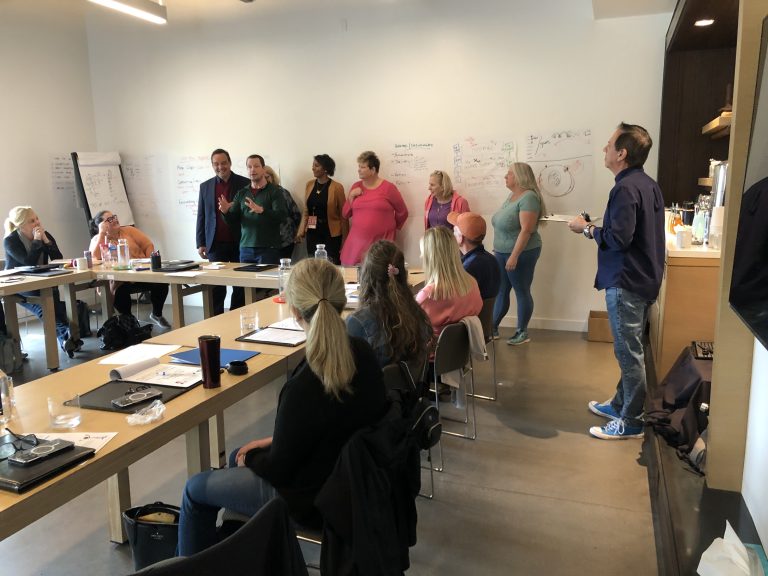
Participants then learn through short rounds of practice. The facilitator creates an environment that is engaging without putting people on the spot for entertainment. People can take appropriate risks, notice their habits, make adjustments, and try again. Humor may naturally show up, and that helps people relax, but it is never the point of the program.
The most valuable part is the debrief. A strong facilitator connects the activity to the workplace with direct questions: What helped the group move forward? Where did assumptions get in the way? What behavior would change a customer conversation, team meeting, or leadership discussion? Without that bridge, an activity can be memorable but not useful.
Customization also matters. A conference keynote has a different job than a manager development workshop. A team dealing with communication breakdowns needs a different focus than a group preparing for rapid growth. The format can vary, but the standard should remain the same: participants leave with practical behaviors they can recognize and use.
What Applied Improvisation Is Not
Applied improvisation is not an excuse for leaders to avoid planning. It is not a substitute for technical expertise, sound strategy, or clear accountability. It will not resolve a structural problem if roles, priorities, and decision rights are fundamentally unclear.
It is also not forced fun. Some people arrive skeptical of anything labeled improv, especially if they associate it with being asked to perform. That skepticism is reasonable when activities feel disconnected from real work. The answer is not to lower the bar. It is to make the business relevance unmistakable and the learning environment respectful.
The right program does not ask employees to become performers. It asks them to become more capable colleagues: better listeners, clearer communicators, more flexible problem solvers, and steadier leaders.
When Applied Improvisation Delivers the Most Value
This approach is especially useful when an organization wants behavior change, not just a burst of motivation. It can support leadership development, team-building, sales communication, customer service, presentation skills, onboarding, and cross-functional collaboration.
It is particularly effective before or during periods of change, when teams must work through uncertainty together. It also works well at offsites and conferences where leaders want an audience involved rather than passively taking notes. The energy is real, but it has a job to do: make the learning stick.
Your Improv Coach uses this kind of hands-on practice to turn familiar business advice into usable communication habits. The focus stays where it belongs – on influential interactions that help people handle the next conversation better than the last one.
The next unexpected moment at work is already on its way. The most prepared teams are not the ones who predict every twist. They are the ones who can listen, respond, and move forward together when it arrives.

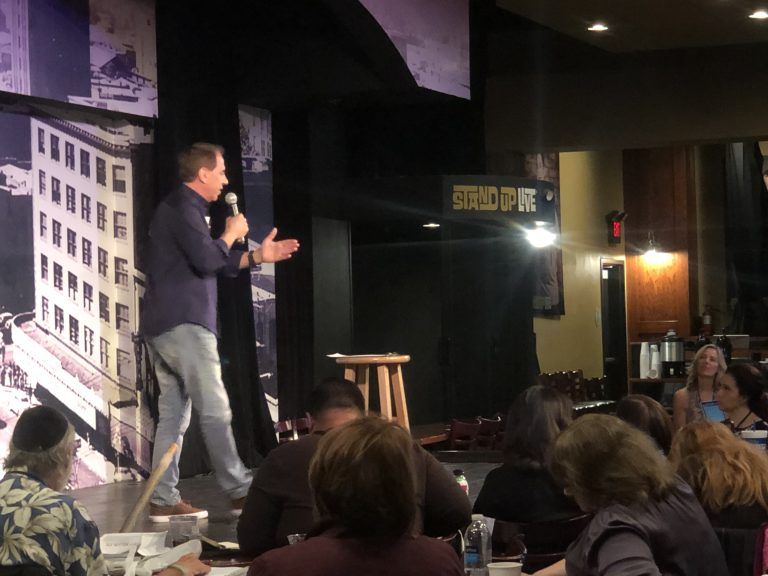
As founder of The Outcasters Improv Training Center and YourImprovCoach.com, Joe Hammer has spent years helping forward-thinking organizations build real skills in listening, collaboration, and adaptability under pressure through interactive, improv-based training. His engagements often open with a high-energy presentation on using principles of improv in effective business communication, a great way to set the tone at a conference, offsite, or leadership summit, before teams move into hands-on training.