7 Manager Feedback Techniques That Change Behavior
The sentence, “I have some feedback,” can make even a strong employee brace for impact. That reaction is not a sign that people are fragile. It is a sign that too many feedback conversations have been vague, delayed, overly personal, or disconnected from what the employee can actually do next.
Effective manager feedback techniques replace that uncertainty with direction. They help people see the situation clearly, understand the business impact, and leave the conversation knowing what better performance looks like. Done well, feedback does more than correct a problem. It builds judgment, confidence, accountability, and trust.
For leaders, this is not a soft skill on the side of the job. It is one of the clearest ways to shape how a team communicates and performs when pressure rises.
Why Feedback Fails Even When the Manager Means Well
Most managers do not avoid feedback because they do not care. They avoid it because the conversation feels loaded. They worry about hurting morale, provoking defensiveness, or saying the wrong thing. So they wait. Then a small issue becomes a pattern, and a short conversation turns into a formal performance discussion.
The other common mistake is treating feedback as a verdict. “You need to be more proactive” may be true, but it gives the employee no useful picture of what proactive behavior looks like in a real meeting, client interaction, or project handoff.
Strong feedback is specific without becoming microscopic. It is candid without being careless. Most of all, it is a conversation, not a speech delivered from the manager’s side of the desk.
1. Address the Moment While It Is Still Useful
Feedback loses value when it arrives after everyone has forgotten the details. If an employee handled a tense customer call well on Tuesday, recognize it Tuesday. If a project update left key stakeholders confused, address it while the meeting is still fresh.
That does not mean managers should react to every annoyance in real time. Some situations need a pause, especially when emotions are high or facts are incomplete. The goal is not instant commentary. The goal is timely coaching, delivered when the employee can connect the feedback to a specific choice and apply it again soon.
A useful opening might sound like this: “In this morning’s client meeting, I noticed you answered the pricing question before confirming what the client was trying to solve. Let’s talk about how that affected the conversation.”
The manager has named the moment, avoided character judgment, and created room for reflection.
2. Describe What Happened, Not Who the Person Is
Labels shut people down. Observable behavior gives them something to work with.
Compare “You were disorganized” with “The project status update did not include ownership or due dates, so the team left unsure about next steps.” The first statement invites an argument about identity. The second identifies a business consequence that can be corrected.
This distinction matters even more with high-performing employees. People who take pride in their work may hear broad criticism as a challenge to their competence. Clear, behavior-based feedback lets them focus on the adjustment rather than defending their reputation.
Managers should also resist turning one incident into a permanent story. Words such as “always,” “never,” and “constantly” are rarely accurate, and they make the recipient search for exceptions instead of listening for the point.
3. Connect Feedback to the Work That Matters
Employees are more likely to act on feedback when they understand why it matters beyond pleasing the manager. Tie the observation to customer confidence, team speed, decision quality, revenue, safety, or the group’s ability to execute.
For example: “When you interrupted the operations lead twice, we missed information that would have changed the timeline. In cross-functional meetings, we need everyone to get their full point across before we decide.”
That is very different from saying, “Try not to interrupt.” One request sounds like etiquette. The other explains the operational cost.
This is where leaders must use judgment. Not every habit needs a major business case. But when the feedback concerns communication, collaboration, or leadership presence, people need to see how their behavior affects the larger system around them.
4. Ask for Their Read Before Giving Your Answer
Managers often arrive at a feedback conversation with a diagnosis already prepared. Sometimes they are right. But if they do all the talking, they may miss context, assumptions, workload constraints, or an issue that is bigger than one employee’s behavior.
Try asking, “How do you think that meeting went?” or “What were you trying to accomplish when you made that decision?” Then listen for the gap between intention and impact.
This is not a trick question. It is a way to make the employee an active participant in solving the problem. A team member who identifies the issue in their own words is more likely to own the next step.
There is a trade-off here. In an urgent or high-risk situation, the manager may need to be more direct: “Stop using that process until we review it.” But for most performance coaching, curiosity produces better information and stronger commitment than a quick lecture.
5. Make the Next Behavior Easy to Picture
“Communicate better” is not a coaching plan. “Before your next executive update, lead with the decision needed, then give the two facts that support it” is.
The best manager feedback techniques turn abstract expectations into visible actions. If someone needs to improve client communication, identify the moment to change: how they open the call, how they handle a question, or how they close with agreed next steps. If someone needs to lead meetings more effectively, clarify what to prepare, what to say, and how to involve the room.
Employees do not need a script for every situation. They need a practical target they can recognize and practice. Managers can help by asking, “What will you do differently in the next meeting?” If the answer remains general, keep working until it becomes concrete.
6. Give Positive Feedback With the Same Precision
Generic praise feels good for a moment, but it does not teach much. “Great job” is better than silence, yet it leaves employees guessing what they should repeat.
Specific recognition reinforces valuable choices. “You slowed down when the client raised a concern, summarized what you heard, and brought the conversation back to the decision. That helped the group stay focused.” Now the employee knows which behavior created the result.
This is especially useful for developing leaders. When managers name effective communication in action, they show the whole team what good looks like. Recognition becomes more than morale support. It becomes a practical standard.
Do not force a compliment into every corrective conversation to soften the message. People can spot a formula. Positive feedback deserves its own timely, credible moments.
7. Practice the Conversation Before the Real One
A difficult feedback conversation is a performance moment. The manager has to listen, stay composed, respond to emotion, clarify expectations, and keep the discussion productive. Those abilities improve through practice, not by reading a checklist five minutes before the meeting.
Before an important conversation, leaders should rehearse the first two or three sentences aloud. They should anticipate reasonable questions and decide which facts matter most. They should also practice pausing after the employee responds rather than rushing to fill the silence.
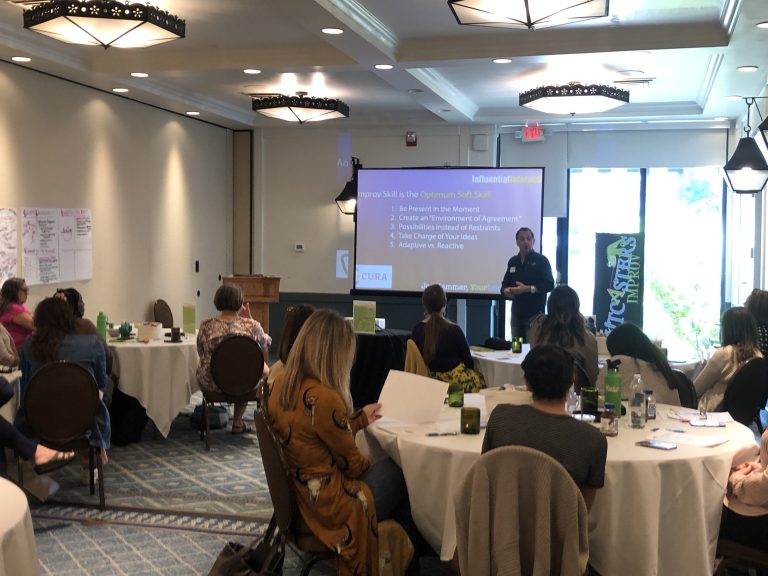
This is one reason interactive leadership development is so effective. In programs from Your Improv Coach, managers can practice high-stakes workplace conversations in a low-risk setting, receive immediate coaching, and adjust their approach before the moment carries real consequences. The value is not entertainment. It is building the communication habits leaders need when the response is unscripted.
Feedback Should End With Ownership
A productive conversation closes with agreement, not ambiguity. The employee should understand the expected change, when they will apply it, and how the manager will support or follow up. The manager should leave with a clear responsibility, too: provide resources, remove an obstacle, observe progress, or make time for another conversation.
A simple close can carry real weight: “For Thursday’s review, open with the recommendation and ask the team for concerns before moving into details. I will sit in, and we will spend ten minutes afterward discussing what worked.”
That is fair, direct, and measurable. It also sends a powerful message: improvement is not a one-time correction. It is a shared commitment to getting better at the work.
The next feedback conversation does not need to be perfect. It needs to be specific, timely, and useful enough that the person across from you can take the next right action with confidence.