Adaptability Training for Employees That Works
A client changes the scope two hours before a presentation. A key team member is out. A customer rejects the solution everyone expected them to approve. These are not rare exceptions to business as usual. They are the moments that reveal whether a team can think clearly together. Adaptability training for employees gives people practical ways to respond without freezing, blaming, or rushing toward a weak answer.
The goal is not to make employees comfortable with constant disruption. That would be unrealistic, and it can excuse poor planning. The goal is to help people stay present, communicate clearly, and make useful decisions when the plan needs to change. Teams that can do that protect customer relationships, reduce rework, and give leaders more confidence in what happens when they are not in the room.
Why Adaptability Is a Business Skill, Not a Personality Trait
Some employees appear naturally flexible. They recover quickly from an unexpected question, a shifting priority, or a difficult conversation. Others need more time to process change before they can contribute. Neither response is fixed.
Adaptability is a set of observable workplace behaviors. It shows up in whether someone listens before reacting, asks a clarifying question instead of making an assumption, offers a constructive next step, and keeps the conversation moving when tension rises. Those behaviors can be practiced.
This matters because change has a communication cost. When roles shift or information is incomplete, people often fill the gaps with guesses. Meetings get longer. Handoffs become messy. A manager may repeat a decision several times because the team heard the words but did not understand what must happen next.
Effective training addresses that cost directly. It helps employees replace reflexive reactions such as “That will not work” or “We have always done it this way” with responses that create options. It does not require people to ignore legitimate risks. A flexible team can still challenge a decision, raise concerns, and protect quality. The difference is that it does so in a way that moves the work forward.
What Adaptability Training for Employees Should Build
A good program should feel relevant before the first exercise begins. A sales team facing unpredictable buyer conversations needs different practice than an operations group dealing with changing workflows. Leaders navigating a merger need a different level of discussion than new hires learning how to speak up in meetings.
The strongest programs connect adaptability to the actual interactions employees face. They use active participation, quick feedback, and scenarios that ask people to make choices under modest pressure. That is more useful than telling people to “embrace change” in a slide presentation and hoping the message sticks.
Composure under pressure
When people feel surprised or challenged, their first instinct can be to defend their position, overexplain, or go quiet. Training gives them a chance to notice that instinct and choose a more productive response.
Composure does not mean acting detached. It means creating enough space to hear what is happening, identify what matters, and respond with intention. For a manager, that may mean acknowledging a team member’s concern before redirecting the conversation. For a customer-facing employee, it may mean confirming the customer’s new priority before proposing an alternative.
Clear communication with incomplete information
Most workplace changes arrive before every detail is known. Employees need to distinguish between what is confirmed, what is still being decided, and what action is needed now.
Adaptability training improves the language people use in those moments. Participants practice asking better questions, stating assumptions, and making concise recommendations. This reduces the familiar cycle of vague updates, conflicting interpretations, and unnecessary follow-up meetings.
Collaborative problem solving
A team cannot adapt if every surprise becomes a contest over whose idea wins. Productive collaboration requires people to build on useful input, surface constraints early, and share ownership of the next move.
That does not mean every decision needs consensus. In a fast-moving situation, someone may need to decide. But employees still need a way to contribute information, test an idea, and align around execution once a direction is chosen. Training can make those habits visible and repeatable.
Confidence in unscripted moments
Many professionals are confident when they have prepared their talking points. The real test comes when a senior leader asks an unexpected question, a prospect shifts the conversation, or a project update exposes a problem no one planned to discuss.
Practice in a low-risk setting helps employees become less dependent on perfect scripts. They learn that they can pause, listen, organize a response, and contribute even when they do not have a polished answer ready. That confidence improves presentations, leadership presence, and day-to-day communication.
Move Beyond Passive Change Training
There is a place for explaining a new process, policy, or strategic direction. Employees need information. But information alone does not prepare them for the human side of change: uncertainty, competing priorities, disagreement, and the need to respond in real time.
Passive training often creates a false sense of readiness. People may agree with the message in the room, then revert to familiar habits when an urgent email arrives or a meeting goes off track. Behavior changes when employees have an opportunity to practice the behavior, receive useful coaching, and try again.
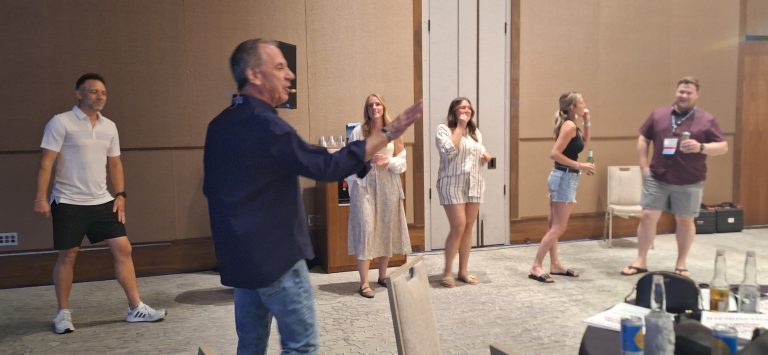
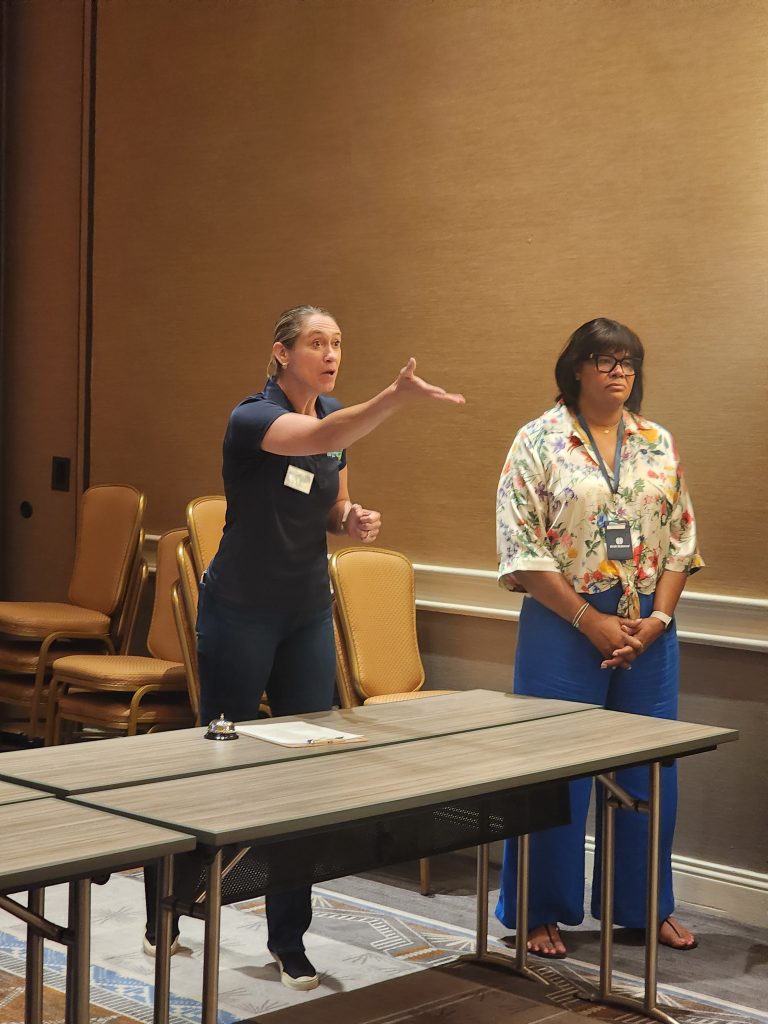
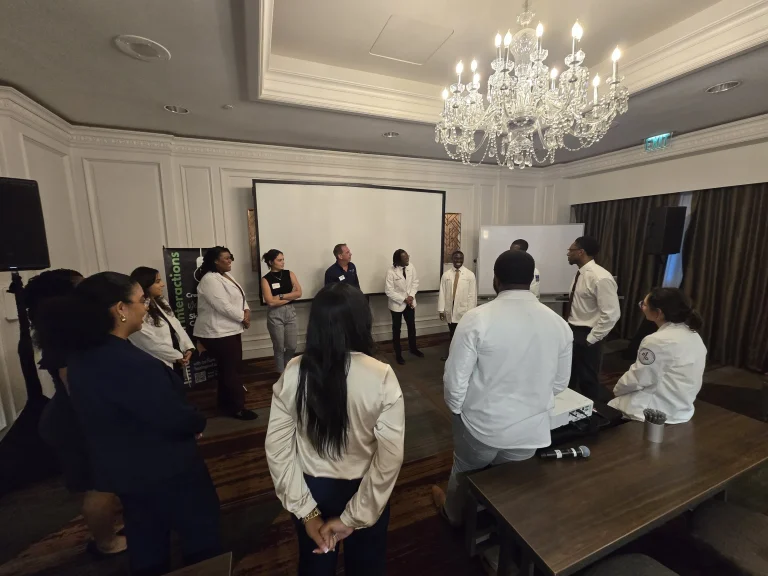
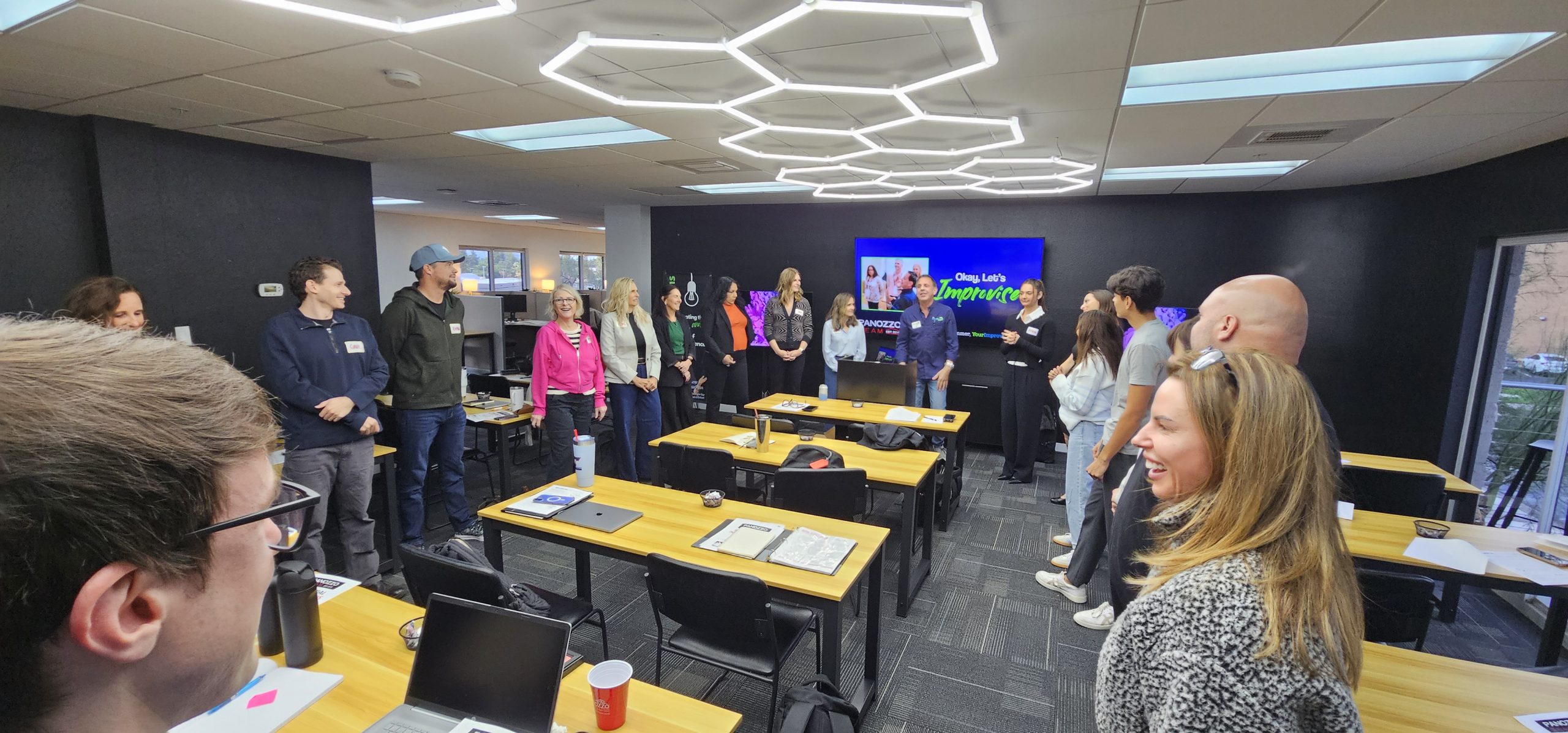
That is why interactive learning matters. Well-designed improvisation-based business training creates a structured environment where people can rehearse the skills behind adaptability without pretending the workplace is a stage. The work stays focused on business outcomes: better listening, clearer responses, stronger collaboration, and more composed leadership.
Your Improv Coach uses this type of active practice to help teams handle real communication challenges with more confidence. The experience can be energetic and enjoyable, but the value is not entertainment. Participants leave with behaviors they can use in the next meeting, customer conversation, or project setback.
How Leaders Can Reinforce Adaptability After Training
Training has more impact when managers reinforce the same behaviors in everyday work. A leader does not need to turn every staff meeting into a workshop. Small, consistent prompts are often enough.
After a plan changes, ask the team: What do we know? What are we assuming? What is the next useful action? Those questions slow down unproductive reactions without slowing down the business. They also model that uncertainty can be managed openly rather than avoided.
Leaders can also recognize the behaviors they want repeated. Instead of offering a general compliment for “being flexible,” name what happened: a team member clarified a customer concern, adjusted the approach, and kept the relationship moving. Specific recognition tells people what adaptability looks like in their organization.
There is a trade-off to manage. Teams should not become so eager to adapt that they accept avoidable chaos. If priorities change every week because decision-makers are unclear, the fix is better leadership discipline, not asking employees to absorb more disruption. Adaptability works best alongside clear goals, defined decision rights, and honest communication about constraints.
Measure the Change Where Work Happens
The best evidence of training is not whether participants enjoyed it, though engagement matters. Look for changes in the moments that used to create friction.
Department heads might track whether project handoffs require fewer corrections, whether meetings end with clearer ownership, or whether customer escalations are resolved faster. HR and learning leaders can gather manager observations before and after a program: Are employees contributing more effectively during change? Are managers spending less time translating decisions or repairing misunderstandings?
Qualitative feedback is valuable here, especially when it includes examples. A leader who says, “My team stopped arguing about the change and started identifying what we could control,” is describing a meaningful shift. Pair those observations with the measures that matter to the business, whether that is speed, retention, customer experience, quality, or team performance.
Adaptability is not about having a clever response to every surprise. It is about helping people stay useful when certainty disappears. Give employees a chance to practice that skill before the next high-stakes moment, and they will be far more likely to meet it with focus, judgment, and forward motion.
Build this kind of adaptability across your organization. See The Outcasters’ corporate improv training programs, delivered on-site, virtually, or at our Scottsdale training center.

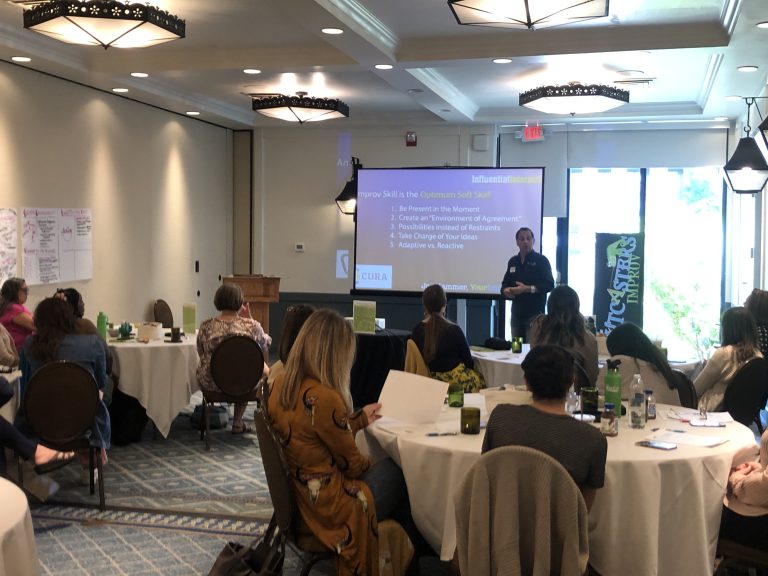
As founder of The Outcasters Improv Training Center and YourImprovCoach.com, Joe Hammer has spent years helping forward-thinking organizations build real skills in listening, collaboration, and adaptability under pressure through interactive, improv-based training. His engagements often open with a high-energy presentation on using principles of improv in effective business communication, a great way to set the tone at a conference, offsite, or leadership summit, before teams move into hands-on training.