Leadership Under Pressure Training That Sticks
A client changes the scope halfway through the meeting. A key presenter is out sick. The numbers arrive late and they are not good. Everyone in the room looks to the leader.
That moment is where leadership under pressure training earns its place. Leaders are rarely judged by how they handle the easy agenda. They are remembered for how they respond when the plan breaks, the stakes rise, and their team needs direction before every answer is available.
The goal is not to create leaders who never feel pressure. That is unrealistic. The goal is to help people recognize pressure, manage their response, communicate with purpose, and keep the work moving forward.
Why pressure exposes leadership gaps
Most leaders know what good communication sounds like when they have preparation time. They can organize their thoughts, review the data, and rehearse the message. But pressure changes the conditions. Attention narrows. Assumptions take over. People speak too quickly, stop listening, or delay decisions while waiting for perfect information.
Those habits are costly. A rushed answer can confuse a team. A defensive reaction can shut down useful feedback. Silence can be interpreted as uncertainty, even when the leader is carefully considering the situation.
Pressure also spreads. When a manager appears flustered, employees often become more cautious, less communicative, and less willing to offer ideas. When a leader stays present and clear, the team has a better chance of focusing on what it can control.
This is why a lecture on resilience is not enough. People need practice in the moments that trigger unhelpful habits. They need to experience a shifting conversation, receive new information, make a choice, explain that choice, and adjust without losing their footing.
What leadership under pressure training develops
Effective leadership under pressure training builds observable workplace behavior, not abstract confidence. Participants learn how to pause without appearing disengaged, listen for the point behind a rushed question, and give their team a clear next step even when the full path is still emerging.
Clear communication comes first. Under stress, leaders often over-explain, use vague language, or talk past the actual issue. Training gives them repeated opportunities to state what they know, identify what still needs to be clarified, and direct the next action. That approach is especially valuable in customer escalations, executive updates, operational disruptions, and difficult employee conversations.
The next capability is adaptive decision-making. Fast decisions are not always good decisions, and slow decisions are not always thoughtful. The right pace depends on the risk, the available information, and the reversibility of the choice. Leaders need the judgment to distinguish between a decision that requires immediate action and one that deserves a short pause for better input.
Participants also build stronger leadership presence. Presence is not about sounding polished or performing certainty. It is the ability to stay engaged, respond deliberately, and make other people feel that the situation is being handled. A steady leader can say, “Here is what we know, here is what we are doing next, and here is when we will regroup.” That is far more useful than a confident-sounding guess.
Finally, the best programs strengthen collaboration. A leader under pressure should not become the only person thinking. Teams perform better when leaders invite useful input, acknowledge what they hear, and turn competing ideas into forward movement. The leader still owns the decision. They simply do not waste the intelligence already in the room.
Practice the moments that matter
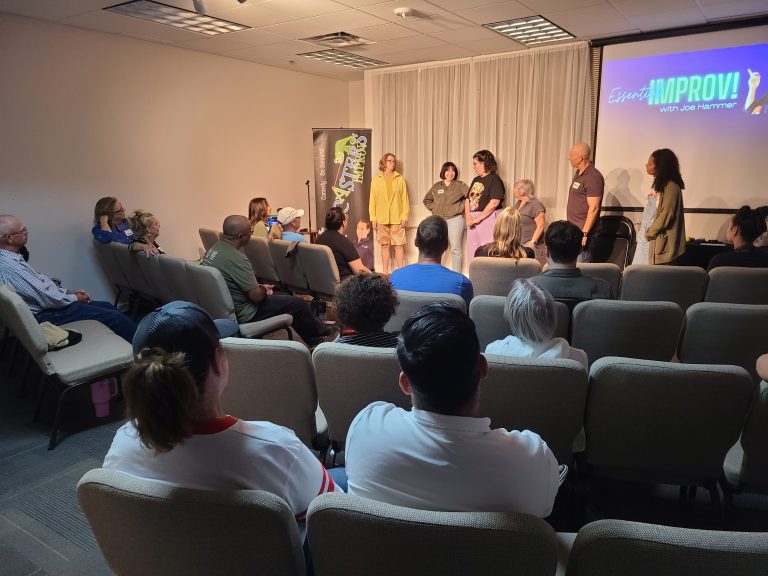
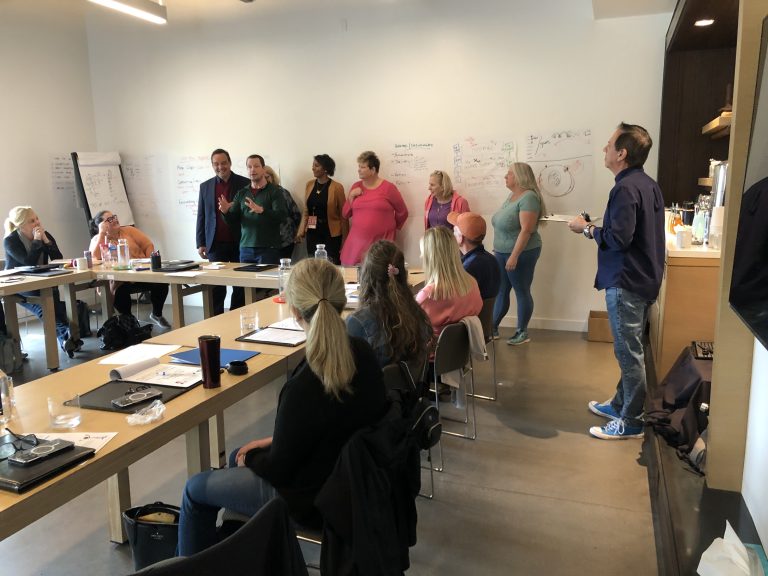
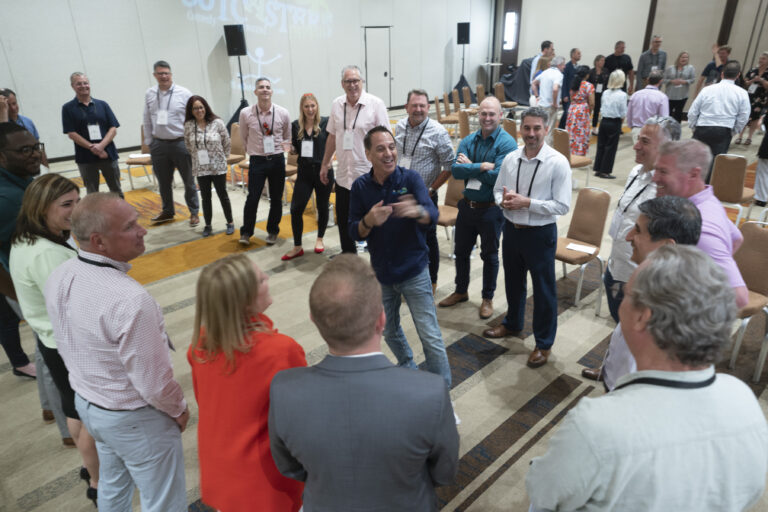
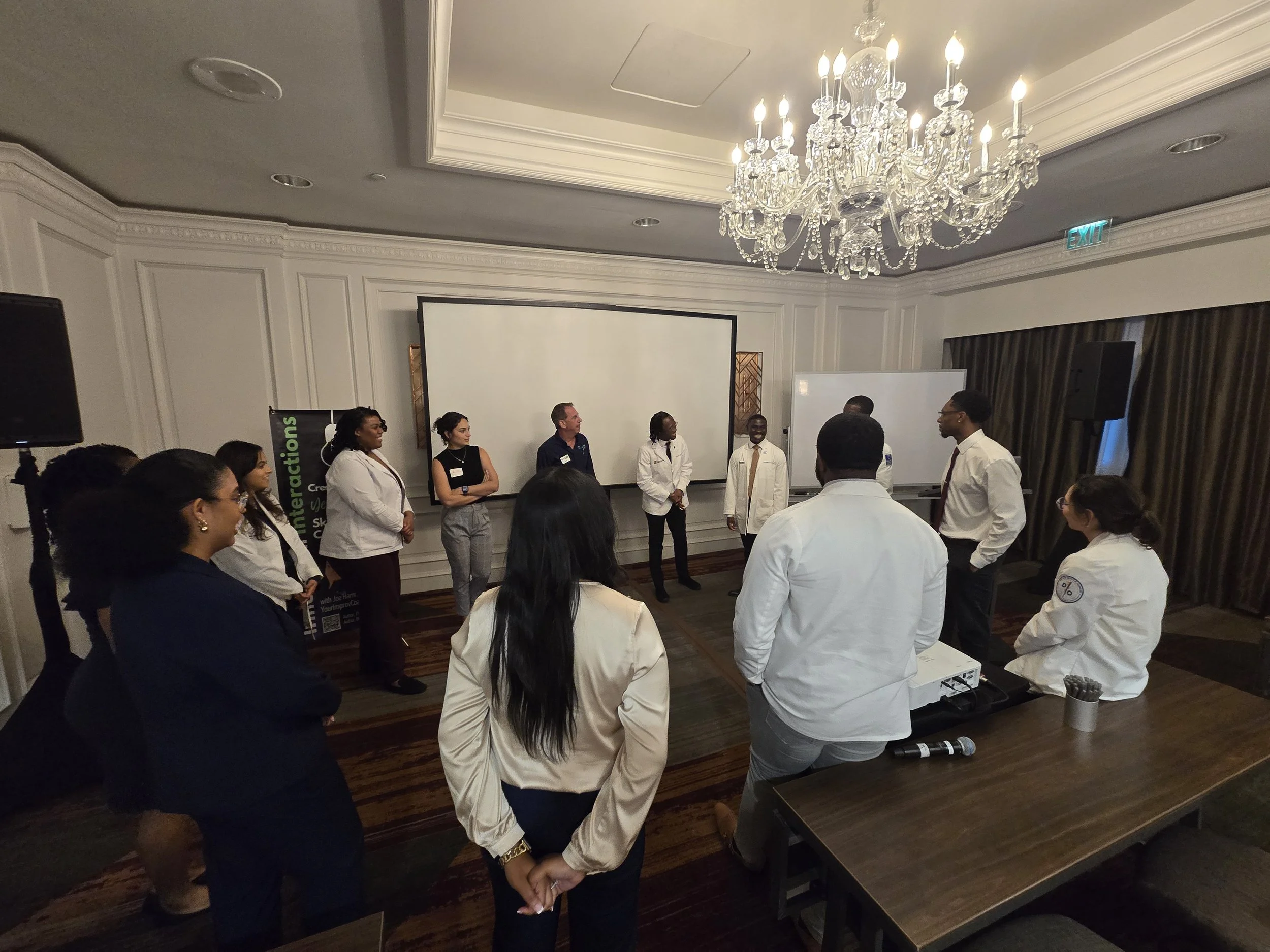
Real development happens when people can try a new response before a high-stakes situation demands it. That is why interactive, improvisation-based learning is so effective for leadership development. It puts participants in active scenarios where the conversation changes, the information is incomplete, and the response has to be immediate.
This is not performance comedy and it is not generic team-building. The work is grounded in business situations leaders face every week: an unexpected objection in a presentation, a tense conversation between departments, a customer who changes direction, or a team member who needs clarity during a fast-moving project.
A strong facilitator creates enough challenge to reveal default habits, while keeping the environment constructive enough for people to take risks. Participants can notice when they rush to solve, interrupt, defend their position, or retreat into silence. Then they get another chance to respond with more focus.
That repetition matters. Reading about calm leadership is easy. Maintaining composure while colleagues are waiting, circumstances are changing, and your first idea does not work is a different skill. Practice closes that gap.
The difference between calm and passive
Organizations sometimes misunderstand composed leadership. They want leaders who are calm, but accidentally reward leaders who are detached. Calm does not mean avoiding conflict, delaying a necessary decision, or speaking so carefully that nobody understands the direction.
Composure should make a leader more effective, not less visible. A composed leader can address tension directly. They can say no when needed. They can challenge an assumption without attacking the person who made it. They can change course without pretending the original plan was perfect.
That balance is particularly important for senior leaders. Employees watch how executives handle bad news, conflicting priorities, and public disagreement. If leaders become reactive, the organization learns to hide problems. If leaders stay curious and decisive, people are more likely to raise concerns early, when there is still time to act.
Make the training fit the pressure your team faces
There is no one-size-fits-all pressure scenario. A healthcare leadership team may need sharper communication during rapid operational changes. A sales organization may need to respond more effectively when a buyer challenges the proposal. A technology team may need better cross-functional conversations when deadlines, dependencies, and customer expectations collide.
The most useful training begins with the organization’s real friction points. Where do conversations stall? What happens when priorities change? Which meetings produce plenty of discussion but no decision? When does the team become overly cautious, defensive, or disconnected?
From there, the training can be designed around the appropriate level of challenge. New managers may need practice speaking with authority and handling unexpected questions. Experienced leaders may need to improve how they create clarity across competing functions. Executive teams may need to work on productive disagreement when the decision carries significant risk.
At Your Improv Coach, programs are built around those practical outcomes. The experience can work as a focused leadership workshop, a team-development program, or an energizing conference session that gives participants tools they can use in their next meeting.
What managers should do after the workshop
Training should not end when participants leave the room. Managers can reinforce the learning by changing how they run meetings and respond to everyday uncertainty.
Start by making clarity visible. At the end of a complicated discussion, ask someone to state the decision, the owner, and the next deadline. When new information changes the plan, explain what changed and why. These small habits reduce confusion and show employees that adjustment is part of good execution, not evidence of failure.
Create room for people to think out loud without turning every meeting into an open-ended debate. Ask for perspectives early, then make the call when it is time. If the decision must be revisited, say so. Teams can handle a changing direction when they understand the reason and know what happens next.
Leaders should also model recovery. Nobody responds perfectly in every difficult moment. A leader who recognizes that a message landed poorly, clarifies it, and moves forward demonstrates more credibility than one who doubles down. That behavior gives others permission to learn quickly instead of protecting their image.
A stronger response is a competitive advantage
Pressure is not an occasional leadership test. For many organizations, it is part of the operating environment. Clients expect speed. Employees expect clarity. Markets change before the slide deck is finished.
The leaders who stand out are not the ones with a scripted answer for every problem. They are the ones who can listen closely, think clearly, communicate directly, and help their people take the next useful step. Give leaders a place to practice those responses now, and the next unexpected moment becomes a chance to lead rather than a reason to freeze.
Help your leaders practice these skills under real pressure. The Outcasters’ corporate improv training is portable… on-site or at our North Scottsdale training center.

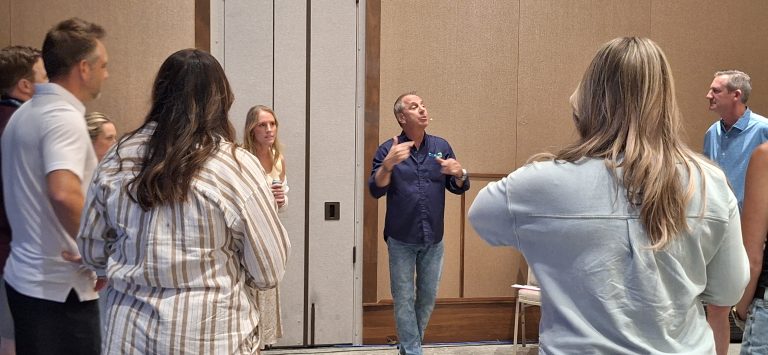
As founder of The Outcasters Improv Training Center and YourImprovCoach.com, Joe Hammer has spent years helping forward-thinking organizations build real skills in listening, collaboration, and adaptability under pressure through interactive, improv-based training. His engagements often open with a high-energy presentation on using principles of improv in effective business communication, a great way to set the tone at a conference, offsite, or leadership summit, before teams move into hands-on training.