Difficult Conversation Training Managers Can Use
A manager learns the real value of training when a normally reliable employee misses another deadline, a top performer becomes defensive, or two team members stop speaking to each other. Difficult conversation training managers can use should prepare them for those moments, not hand them a script that falls apart the minute emotions rise.
The goal is not to make hard conversations feel easy. It is to help managers stay present, clear, and constructive when the stakes are high. When leaders can address performance, behavior, conflict, and change without avoiding the issue or escalating it, teams move faster and trust grows.
Why difficult conversations expose leadership gaps
Most managers are promoted because they know the work, deliver results, or lead projects well. That does not automatically mean they have practiced giving direct feedback, responding to disappointment, or addressing tension between people who both feel they are right.
Under pressure, even capable leaders tend to default to familiar habits. Some soften the message until it is unclear. Some over-explain, filling every quiet moment with words. Others become overly formal or retreat into a policy-heavy conversation that may be technically correct but feels cold and disconnected.
Those reactions have consequences. Vague feedback leaves an employee guessing what needs to change. Delayed feedback allows frustration to build. A defensive response from a manager can turn a solvable issue into a relationship problem.
Effective training gives managers a chance to recognize those patterns before they are sitting across from a frustrated employee. It builds the practical behavior behind composed leadership: listening for what is actually being said, naming the business impact, asking useful questions, and holding the conversation steady when the response is not what they expected.
What managers need to practice, not just learn
A slide deck can explain the components of a productive conversation. It cannot replicate the moment an employee says, “I do not agree with that,” or “No one told me this was a problem.” Managers need live practice because difficult conversations are rarely linear.
The strongest programs focus on real workplace situations. A manager may need to address a missed commitment, reset expectations after a team reorganization, give feedback to a high-performing but disruptive employee, or respond to an employee who is upset about a decision they cannot change. The wording matters, but the ability to adjust matters just as much.
Training should help managers practice four connected capabilities:
- Listening without preparing a rebuttal while the other person is still talking.
- Stating an observation and its impact without labeling the person or guessing their intent.
- Asking questions that create clarity rather than cornering someone into agreement.
- Responding calmly when a conversation takes an unexpected turn.
This is where interactive learning earns its place. Managers benefit from trying a response, seeing how it lands, making an adjustment, and trying again. The learning becomes memorable because it is tied to the physical experience of staying calm, listening closely, and choosing the next response rather than reacting automatically.
Difficult conversation training for managers starts with clarity
Before a manager schedules the meeting, they need to know what conversation they are having. Is the concern about results, behavior, communication, a broken agreement, or a change the employee needs to understand? Blending several issues together creates confusion and gives the other person too much to defend at once.
Good preparation is specific. Rather than thinking, “She has a bad attitude,” a manager should be able to identify what occurred, when it occurred, who was affected, and what needs to be different. That is not about building a case against someone. It is about entering the conversation with enough clarity to be fair.
The manager also needs a practical outcome in mind. Sometimes the outcome is a clear performance commitment. Sometimes it is understanding what is blocking progress. Sometimes it is setting a boundary or explaining a decision. The desired outcome shapes the conversation, but it should not become a rigid script.
There is a trade-off here. Too little preparation can make a manager ramble or retreat from the point. Too much rehearsal can make them sound rehearsed, especially when the employee brings up information the manager did not expect. Preparation should create confidence, not a monologue.
Direct does not have to mean harsh
Managers often mistake directness for bluntness because they have seen feedback delivered poorly. Directness is simply clear. It identifies the issue, describes why it matters, and explains what must happen next.
Harshness adds judgment, exaggeration, or humiliation. Phrases such as “you always” and “you never” may communicate frustration, but they rarely produce useful dialogue. They invite the employee to debate examples instead of engaging with the concern.
A manager can be both respectful and firm: “The client update was submitted two days late, and that delayed the team’s response. We need a dependable process for meeting that deadline going forward.” That message is clear without turning the employee into the problem.
Curiosity is useful, but accountability still matters
Listening and asking questions do not mean a manager has to negotiate every expectation. An employee may have a legitimate obstacle, incomplete information, or a perspective the manager has missed. Exploring that context is good leadership.
At the same time, managers must know when the conversation calls for a decision rather than an open-ended discussion. If a behavior is affecting colleagues, a deadline is nonnegotiable, or a policy must be followed, the manager should communicate that plainly. Empathy and accountability can operate in the same conversation.
Build confidence for the unpredictable moment
The hardest part of these conversations is often not the opening. It is what happens next. The employee may become quiet, emotional, frustrated, argumentative, or unexpectedly relieved. They may offer new facts. They may ask a question the manager cannot answer immediately.
Managers do not need perfect answers to lead well in these moments. They need the confidence to pause, acknowledge what they heard, and keep the conversation moving toward clarity. A brief pause can feel uncomfortable, but it is usually better than rushing in with a defensive explanation.
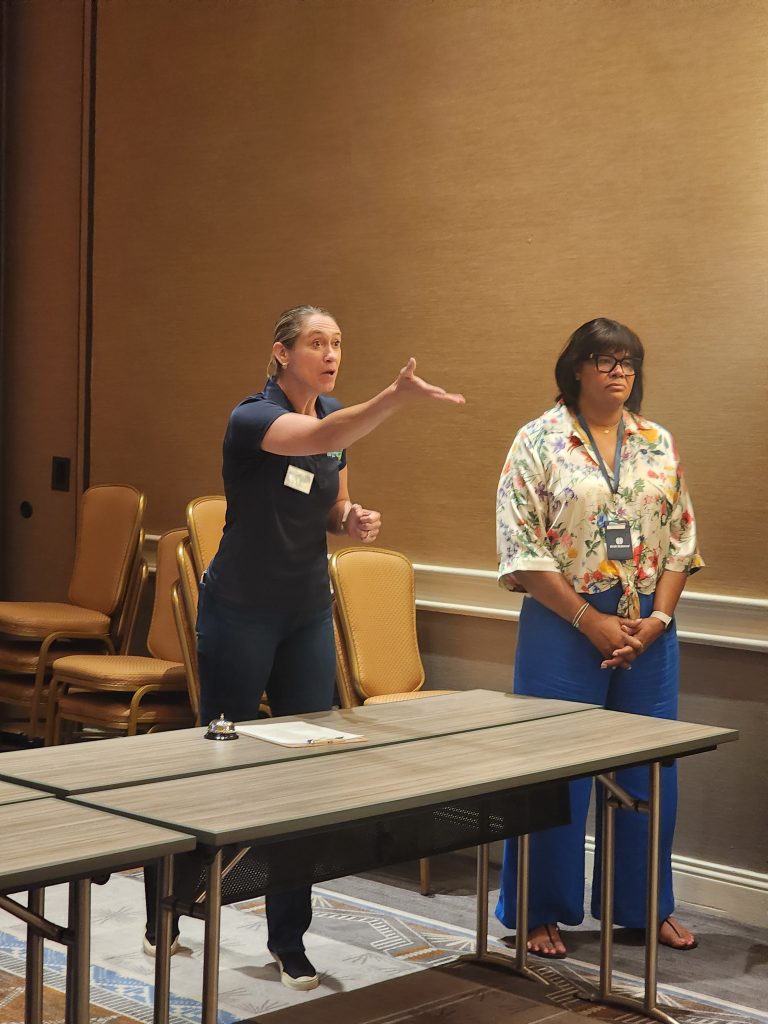
This is why practice under realistic pressure is so valuable. Experiential, improvisation-based training helps managers become more responsive when their prepared language is no longer enough. The focus is not on performance or comedy. It is on improving communication habits when the conversation changes direction.
At Your Improv Coach, that means active exercises built around the workplace skills managers use immediately: focused listening, clear communication, collaboration, adaptability, and calm leadership presence. Participants do not simply hear what good communication sounds like. They experience the difference between reacting quickly and responding productively.
Make the learning part of the manager’s routine
One workshop will not erase years of avoidance or anxiety around conflict. It can, however, give managers a shared language and a practical starting point. The follow-through determines whether that learning becomes part of the culture.
Organizations can reinforce the work by having managers prepare for important conversations with a peer, discuss challenging situations in leadership meetings, and reflect afterward on what worked and what they would change. Senior leaders matter here. When they address issues directly and respectfully, they give other managers permission to do the same.
It also helps to measure progress through behavior, not just satisfaction scores. Are managers addressing concerns earlier? Are employees leaving feedback conversations with clear next steps? Are recurring conflicts being resolved before they damage collaboration? Those are signals that training is changing daily leadership practice.
A difficult conversation is not a test of whether a manager can say the perfect thing. It is an opportunity to show people that clarity, respect, and accountability can exist in the same room. Give managers a place to practice that skill before the next high-stakes moment arrives, and they will lead with more confidence when it does.
Give your managers a safe place to practice these conversations before the stakes are high. Learn about The Outcasters’ corporate improv training and schedule a free consultation.

As founder of The Outcasters Improv Training Center and YourImprovCoach.com, Joe Hammer has spent years helping forward-thinking organizations build real skills in listening, collaboration, and adaptability under pressure through interactive, improv-based training. His engagements often open with a high-energy presentation on using principles of improv in effective business communication, a great way to set the tone at a conference, offsite, or leadership summit, before teams move into hands-on training.