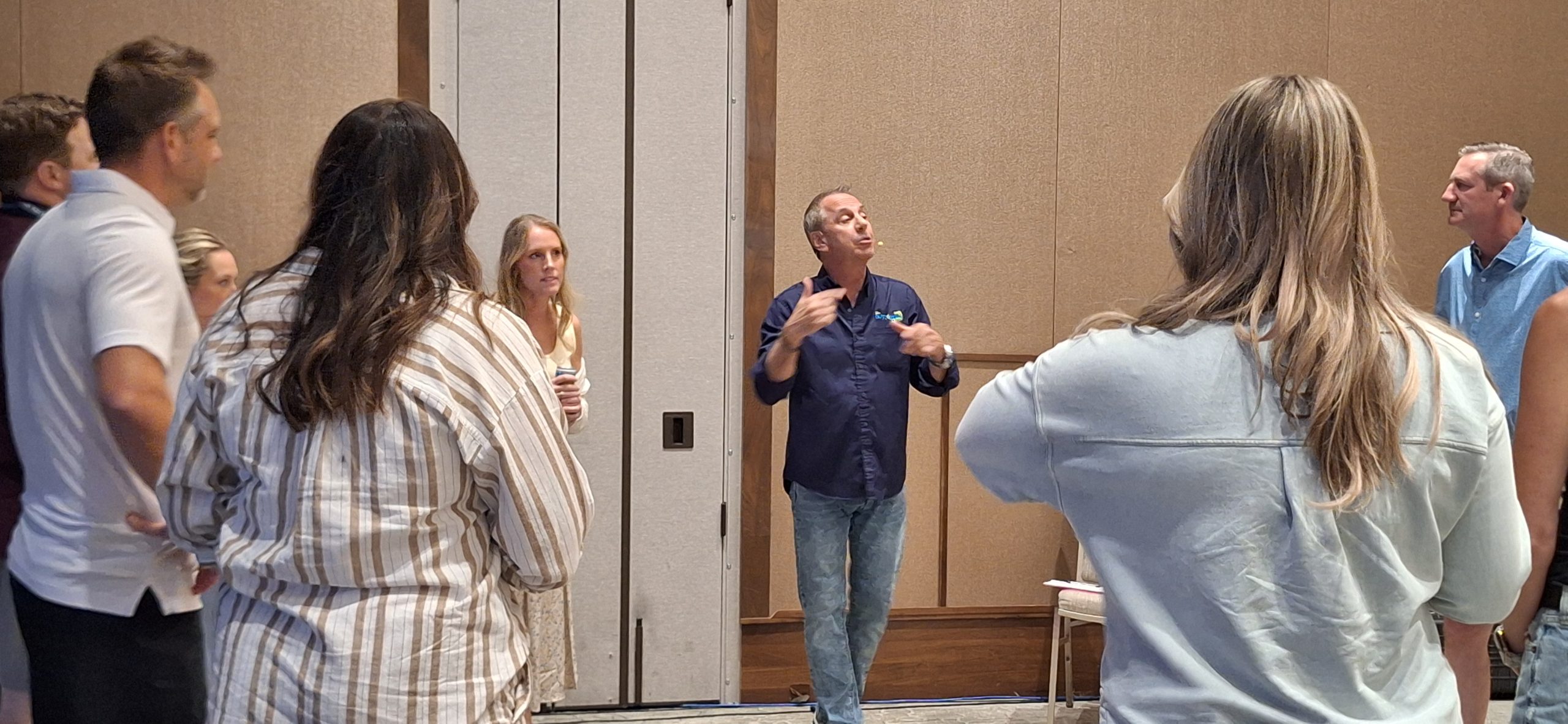
Corporate Improv Training That Builds Better Teams
A client changes direction halfway through the meeting. A presentation screen fails. A manager receives a question they did not expect. A cross-functional team is stuck because each person is defending a different solution. These moments do not call for better scripts. They call for better responses.
Corporate improv training gives professionals a practical place to practice those responses before the pressure is real. It is not comedy training, and it is not a lighthearted break disguised as development. Done well, it is active business training that strengthens how people listen, communicate, collaborate, think on their feet, and lead when the next move is not obvious.
Why Corporate Improv Training Works at Work
Most workplace communication programs tell people what good communication looks like. Participants hear about active listening, adaptability, confidence, and collaboration. Then they return to a calendar full of deadlines, difficult conversations, shifting client expectations, and meetings where the stakes feel higher than the training room.
The gap is practice.
Improvisation-based training puts people into short, structured situations where they must pay attention, respond to what is actually happening, and work with others to move forward. There is no time to disappear into a slide deck or wait for the most polished answer. Participants experience the habits that help teams function under pressure, then connect those habits directly to the conversations they have at work.
That difference matters. A professional may understand that they should not interrupt a colleague, but understanding is not the same as noticing the urge to interrupt, pausing, and building on what the colleague has said. A manager may know that change requires flexibility, but knowing it is different from staying composed when a project plan changes two days before a deadline.
Corporate improv training makes those behaviors visible. It gives teams a shared language for the moments that usually create friction, hesitation, or avoidable rework.
The Workplace Skills Teams Practice
The strongest programs are built around business outcomes, not performance tricks. The activities may be energetic and often funny, but the purpose stays clear: help people become more effective in the conversations that influence results.
Listen for What Is Being Said
Listening is not waiting quietly for a turn to speak. In fast-moving meetings, people often listen for confirmation of their own point of view. They miss the concern behind a customer question, the useful detail in a teammate’s idea, or the hesitation that signals a risk the group should address.
Experiential practice trains participants to stay present. They learn to notice what others are offering, respond with greater precision, and reduce the reflex to jump ahead. The business result is clearer conversations, fewer crossed wires, and more productive discussions with clients and colleagues.
Adapt Without Losing Direction
Adaptability can sound abstract until a team faces a genuine disruption. A decision-maker changes priorities. A stakeholder challenges a recommendation. New information undermines the original plan. The people who add value in these moments do not panic or cling to the first answer. They acknowledge the new reality, think clearly, and help the group find the next useful move.
This is especially valuable for leaders and client-facing teams. Confidence under pressure is not about having every answer prepared. It is about staying engaged, asking useful questions, and guiding the conversation when conditions change.
Collaborate Instead of Competing for Air Time
Many teams say they want collaboration while rewarding the fastest speaker in the room. The result is familiar: good ideas arrive half-formed and get dismissed, meetings become status contests, and people leave with different interpretations of the decision.
Improv-based exercises reveal how quickly a group improves when participants support the direction of the conversation rather than trying to win it. This does not mean avoiding healthy disagreement. It means disagreeing in a way that keeps the work moving. Teams practice adding useful information, clarifying assumptions, and making room for perspectives that improve the final decision.
Communicate With More Presence
Professionals do not need to become performers to be compelling. They need to be clear, responsive, and credible when attention is on them. That can mean presenting a recommendation to executives, handling an unexpected objection, leading a department meeting, or speaking with a frustrated customer.
Training helps participants get more comfortable being seen and heard without over-rehearsing every word. The goal is not perfect delivery. The goal is a communicator who can recover, adjust, and remain trustworthy when a conversation takes an unplanned turn.
What Effective Training Looks Like
Not every activity labeled team building produces a workplace benefit. A good corporate improv training program begins with the business challenge. Are leaders struggling to communicate through change? Is a sales or service team having trouble responding to customers in real time? Are departments working in silos? Does an offsite need more than a motivational talk that fades by Monday?
The design should follow the answer.
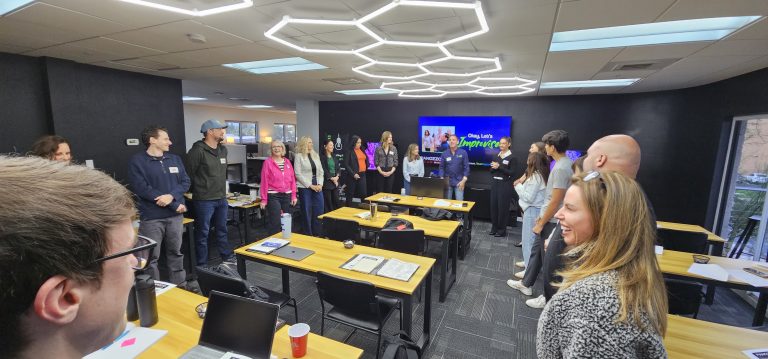
At Your Improv Coach, programs are customized around the organization’s objectives, audience, setting, and timing. That matters because a leadership team navigating a merger needs a different experience than a group of newer professionals building communication confidence. A conference keynote also has different constraints than a hands-on workshop for a single department.
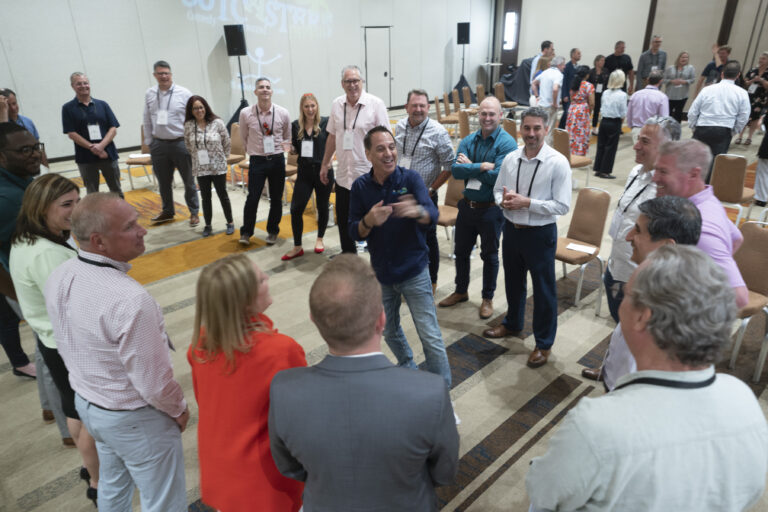
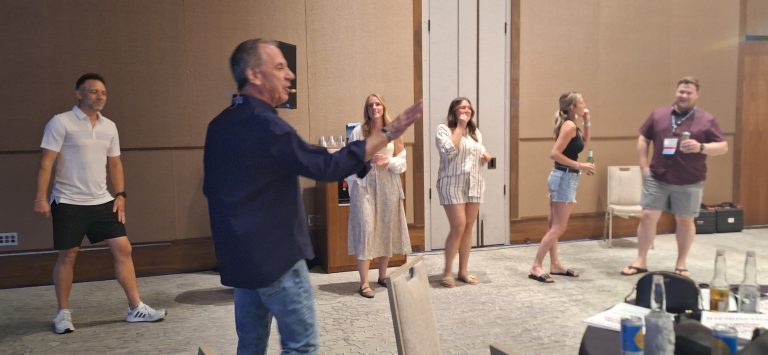
The most useful sessions move quickly from experience to application. Participants take part in a focused exercise, identify the behavior it required, and discuss where that behavior shows up in their work. The facilitator keeps the energy high while connecting the learning to real situations: presentations that change in the room, customer conversations that go off script, team decisions with incomplete information, or difficult feedback discussions.
That reflection is where the activity becomes development. Without it, people may have fun but struggle to carry the learning into a Tuesday afternoon meeting.
When This Approach Is the Right Fit
Corporate improv training is a strong choice when the challenge is behavioral and interactive. It works well for organizations that want people to communicate differently, not simply know more. It is particularly useful when teams need to improve their response to ambiguity, increase trust across functions, strengthen presentation presence, or make meetings more collaborative.
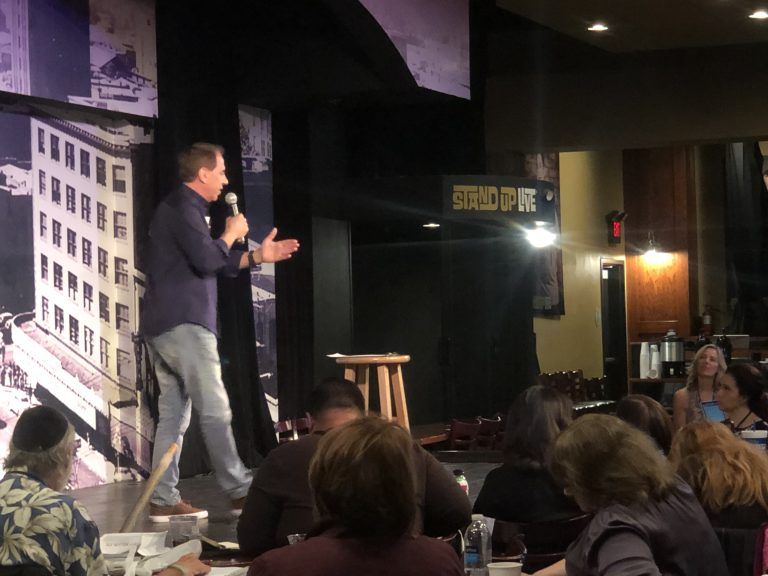
It also fits conferences and offsites where organizers want an audience engaged rather than seated through another passive session. A well-facilitated keynote can give a large group an immediate, memorable experience while reinforcing a message about communication, change, or leadership.
There are trade-offs. If an organization needs to teach a highly technical process, compliance requirement, or software workflow, improvisation should support the learning rather than replace the technical instruction. If the real problem is unclear decision authority or an unmanageable workload, a training session alone will not fix the system. Leaders still need to address process, accountability, and resources.
But when capable people are struggling to apply their skills in live human interactions, active practice can make a measurable difference. The work is not about turning employees into entertainers. It is about helping them become more useful to one another when the room gets complicated.
How to Carry the Learning Back to Work
The session should not be treated as a one-time event. Teams get more value when managers reinforce a small number of observable behaviors afterward. In a staff meeting, that might mean giving colleagues time to finish a thought before reacting. In a project review, it could mean asking what new information changes the team’s approach. In a customer-facing role, it may mean pausing long enough to understand the real need before offering a solution.
Leaders can make the transfer more concrete by discussing recent moments of uncertainty. Where did the team adapt well? Where did people talk past each other? Which conversations needed more curiosity, composure, or shared problem solving? These discussions turn a memorable training experience into an operating habit.
The most valuable outcome is not louder participation or a room full of people who had a good time. It is a team that can hear what is needed, respond without freezing, and move the work forward together when no one has a perfect script.
Ready to bring this to your organization? Explore The Outcasters’ corporate improv training programs and request a free workshop consultation today.