How to Communicate Through Change at Work
Change announcements rarely fail because leaders lack a slide deck. They fail because employees leave the room asking the same questions: What does this mean for me? What happens next? Who can answer the questions no one addressed? Learning how to communicate through change means replacing vague reassurance with clear direction, honest dialogue, and visible follow-through.
For leaders, HR professionals, and department heads, the challenge is not simply delivering news. It is helping people stay productive while information is still developing. A merger, new system, revised strategy, leadership transition, or shifting customer demand can all create uncertainty. Your team does not expect you to predict every detail. They do expect you to communicate with steadiness, listen closely, and make the next step clear.
Start With What People Need to Know
When a business change is announced, leaders often lead with the business case. That matters, but it is not where employees begin. People quickly assess impact: their role, workload, relationships, priorities, and security. If communication skips those concerns, even a well-reasoned strategy can sound disconnected.
Start by separating what is known from what is still being decided. Explain why the change is happening, what will change first, what will not change right now, and when people can expect another update. This creates a usable structure without pretending uncertainty does not exist.
A message such as, “We are evaluating several workflow options and will share the final process next month,” is stronger than filling the silence with speculation. It gives employees a timeline and signals that they will not be left to invent their own answers.
The temptation is to wait until every decision is final. That can be the right call when legal, financial, or personnel details are confidential. But in most cases, long silence creates its own message: leadership is either avoiding the issue or does not have a plan. Communicate what you can, explain what you cannot yet share, and name the next point of contact.
How to Communicate Through Change Without Losing Trust
Trust is built less by one polished announcement than by consistency over time. Employees watch whether leaders repeat the same priorities, whether managers have the information to answer questions, and whether actions match the message.
That requires a communication rhythm. A single town hall may create awareness, but it rarely creates alignment. Follow it with manager conversations, team check-ins, written updates, and opportunities for employees to raise concerns. Different people process change differently. Some want the strategic context; others want a direct conversation about this week’s work.
Keep language plain. Phrases like “organizational optimization” or “strategic realignment” may satisfy a presentation, but they do not tell someone what to do on Tuesday morning. Say what is changing in the work itself. Will approvals move? Will customer handoffs change? Will teams need to learn a new platform? Will priorities shift?
Direct language is not harsh language. You can be candid and respectful at the same time. For example: “This change will require us to stop some work we value so we can focus resources on the services customers need most.” That statement recognizes the cost, explains the decision, and gives people a clear frame for moving forward.
Give Managers More Than Talking Points
Middle managers carry much of the emotional and operational weight of change. They are expected to translate senior leadership decisions, maintain momentum, answer difficult questions, and support people who may be frustrated or concerned. Sending them a memo five minutes before a company-wide announcement sets them up to fail.
Equip managers with the context behind the change, a clear explanation of what is decided and undecided, and guidance for handling questions they cannot answer. Most importantly, give them permission to say, “I do not know yet, but I will find out.” That is more credible than an improvised answer that later proves wrong.
Managers also need room to surface what they are hearing. They often identify confusion, resistance, customer risk, or process gaps before senior leaders see them. Treat their feedback as operational intelligence, not as a barrier to the plan.
Listen for More Than Questions
A quiet room does not always mean agreement. It can mean people are still processing, do not feel safe speaking up, or have concluded that their feedback will not affect anything. Strong change communication creates multiple ways for people to respond.
Ask focused questions. “What part of this change creates the most friction for your team?” will generate more useful input than “Any questions?” So will, “What could prevent us from making this transition successfully?” These questions invite practical concerns rather than forcing employees to package uncertainty into a polished comment.
Listen without rushing to defend the decision. Not every concern requires a reversal, but every concern deserves to be heard accurately. When a leader responds with curiosity, teams are more likely to share early warnings instead of waiting until a problem becomes expensive.
This is where communication training has real business value. Under pressure, people tend to interrupt, over-explain, become defensive, or retreat into scripted language. Hands-on practice helps leaders and teams stay present, hear what is actually being said, and respond with composure when conversations take an unexpected turn.
Turn the Message Into Action
Change becomes believable when people can see what they should do differently. After communicating the direction, translate it into near-term decisions and behaviors. What should each department start, stop, continue, or clarify? What are the first milestones? How will progress be measured?
Avoid overwhelming teams with a 90-day plan if the first five days are unclear. Begin with the immediate work. A sales team may need new customer language. Operations may need revised escalation paths. A leadership team may need a consistent way to explain priorities across departments. The right action depends on the change, but every group should leave with a practical next move.
Then make progress visible. Share early wins, acknowledge complications, and recognize people who are helping the organization adapt. Do not use success stories to pretend the transition is effortless. Use them to show that forward movement is possible and to reinforce the behaviors that are making it happen.
Expect Emotion, Not Just Execution Issues
Leaders sometimes treat resistance as a communication problem to be solved with more information. Information helps, but resistance can also reflect loss. Employees may lose a familiar process, a trusted leader, a sense of expertise, or confidence in where they fit. Those reactions are normal.
You do not need to become a therapist to lead well through change. You do need to acknowledge what people are experiencing. A simple statement such as, “I know this affects the way many of you have built your work and relationships here,” can lower the temperature because it demonstrates awareness.
At the same time, empathy should not turn into indecision. Teams need leaders who can recognize the human impact while still making choices, setting expectations, and holding the line on necessary change. The balance is not always easy. It is a leadership skill that improves through practice, feedback, and real conversation.
Build Confidence Before the Next Change
The goal is not to make every change feel comfortable. Some changes are genuinely difficult, and no amount of communication will make them painless. The goal is to make your organization more capable of handling uncertainty without losing clarity, collaboration, or momentum.
That capability grows when teams practice communicating in real time. Rather than relying on passive presentations, give people opportunities to handle shifting information, competing perspectives, difficult questions, and incomplete answers in a constructive setting. Programs such as Your Improv Coach’s business-focused communication training help teams build those responses through active practice tied to workplace situations.
The next change will not arrive with perfect timing or a complete script. Meet it with a clear message, an open ear, and a team that knows how to respond together.

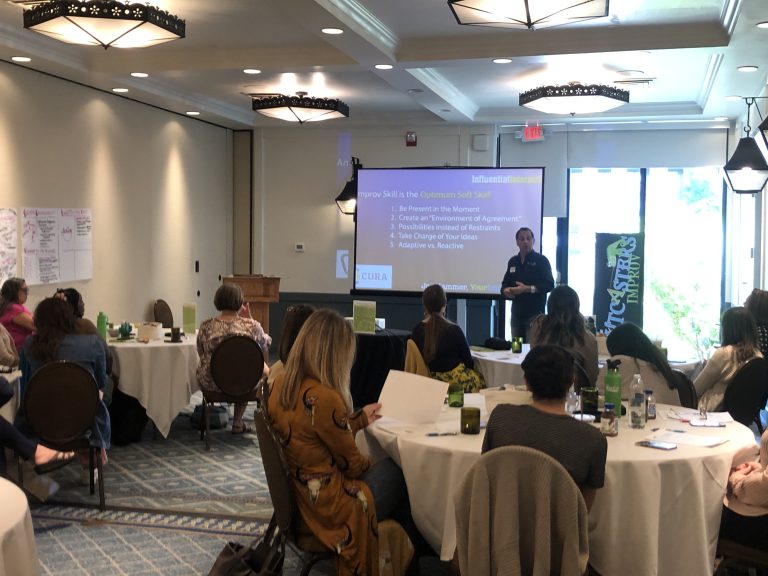
As founder of The Outcasters Improv Training Center and YourImprovCoach.com, Joe Hammer has spent years helping forward-thinking organizations build real skills in listening, collaboration, and adaptability under pressure through interactive, improv-based training. His engagements often open with a high-energy presentation on using principles of improv in effective business communication, a great way to set the tone at a conference, offsite, or leadership summit, before teams move into hands-on training.