How to Improve Meeting Spontaneity at Work
A customer changes the scope halfway through a project review. A senior leader asks a question nobody prepared for. The person with the key information is out that day. These are not meeting failures. They are normal business moments. Learning how to improve meeting spontaneity helps teams respond with useful thinking instead of awkward silence, rushed opinions, or a promise to “take it offline” every time the conversation gets real.
Meeting spontaneity is not about being the funniest person in the room or speaking without a filter. It is the ability to listen, think, contribute, and move a conversation forward when the script changes. For leaders, HR teams, and meeting owners, that capability has a direct effect on decision speed, employee confidence, customer responsiveness, and trust.
Why Meetings Lose Their Energy
Most meetings do not lack ideas. They lack conditions that make it safe and practical to share ideas in real time.
Teams become overly careful when every comment feels like a test. Employees wait for the highest-ranking person to speak first, rehearse a perfect answer in their head, or avoid contributing because they do not want to sound uninformed. Meanwhile, the group spends its time reviewing updates that could have been an email, then rushes through the one discussion that actually needs live thinking.
Too much structure can create the same problem. An agenda matters, particularly for executive reviews, client meetings, and sessions involving major decisions. But an agenda should give a meeting direction, not turn every participant into a reader of prepared remarks. If there is no room to surface a concern, build on an observation, or explore an unexpected opportunity, people learn that the meeting is not a place for genuine collaboration.
The goal is not chaos. The goal is a prepared team that can handle the unprepared moment.
How to Improve Meeting Spontaneity Before the Meeting Starts
Spontaneity begins with preparation. That may sound backward, but people contribute more naturally when they know the purpose of the discussion, the decision at stake, and what kind of input is wanted.
Send a short meeting brief that answers three questions: What are we trying to accomplish? What information should participants review beforehand? What decision, options, or obstacles need active discussion? This keeps the group from spending the first 20 minutes figuring out why it is there.
Just as important, identify where flexibility is welcome. A product team may need to challenge assumptions about a launch. A leadership group may need to consider a new risk. A sales team may need to practice responding when a buyer shifts priorities. Tell participants that useful observations, questions, and respectful disagreement are part of the job, not disruptions to the agenda.
Meeting leaders also need to do their own preparation. Know the essential outcomes, but do not over-script every transition and question. When a facilitator clings too tightly to a plan, the group can feel it. People stop following the conversation and start waiting for permission to return to the slide deck.
Create a Room Where People Can Respond
A spontaneous meeting depends on attention. If participants are answering email, checking chat, or planning their next point while someone else speaks, they cannot respond well. They are reacting to fragments rather than hearing the full idea.
Start by setting one clear expectation: listen to understand before trying to be impressive. That changes the quality of contribution. Instead of repeating a point in different language, participants can connect ideas, identify a missing factor, or offer a workable next step.
Leaders set the standard here. When someone offers an incomplete thought, do not immediately correct it, dismiss it, or answer for them. Ask a focused follow-up: “What are you seeing that we may be missing?” or “What would that look like in practice?” A rough idea may not become the final answer, but it can reveal information the group needs.
It also helps to separate exploration from evaluation. In some meetings, a fast critique is appropriate. In others, immediate judgment shuts down the very thinking you need. Say which mode the group is in. If you are generating options, let people build possibilities first. If you are choosing a path, test the options against clear criteria. Teams become more responsive when they do not have to guess whether every statement will be treated as a proposal, a problem, or a personal opinion.
Use Questions That Move the Conversation Forward
The questions a leader asks determine whether a meeting becomes a status report or a working session. Broad questions such as “Any thoughts?” often produce silence because they demand too much interpretation. Specific questions give people a useful entry point.
Try questions tied to the immediate business issue: “What customer impact are we not considering?” “Where could this plan break under pressure?” “What is the smallest action we could take this week to learn more?” “Who sees this differently?” These questions invite judgment, not just updates.
When someone responds, acknowledge the contribution before redirecting or testing it. That does not mean pretending every idea is strong. It means showing that participation receives a thoughtful response. A simple “That changes how I am looking at the timeline” tells people their attention made a difference.
Avoid filling every pause. A few seconds of quiet can feel long to the person leading the meeting, but it gives people time to think. If your culture has trained employees to wait for the leader’s answer, a deliberate pause is often the first sign that a real answer is welcome.
Build the Skill Through Low-Stakes Practice
You cannot expect confident, composed responses in high-stakes meetings if employees only practice when the stakes are high. Teams need low-risk opportunities to think on their feet, listen closely, and respond to changing information.
Build short exercises into existing team time. Present a common workplace scenario with one key detail missing, then ask the group what they would need to know before acting. Change one condition and ask how their response would shift. Rotate who opens a discussion, summarizes a decision, or responds to a surprise question. Keep the focus on clarity and useful action, not performance.
This practice is especially valuable for managers. A manager who can stay present when an employee raises a concern, a client changes direction, or a project hits a snag gives the team confidence. The response does not need to be immediate certainty. Often, the best response is a calm question, an accurate restatement of the issue, and a clear next move.
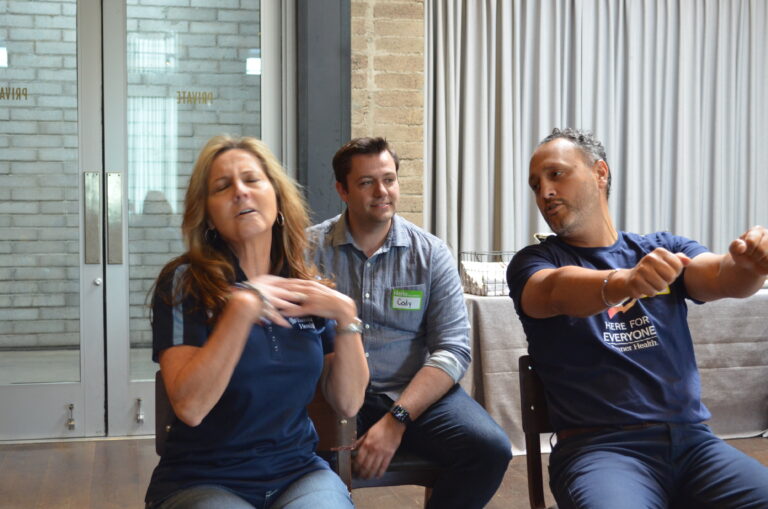
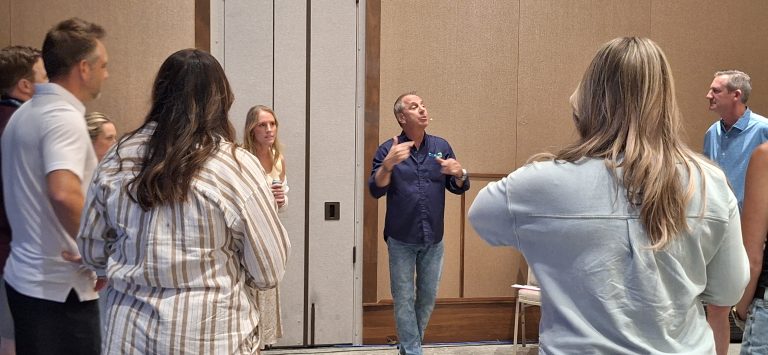
Interactive, improv-based business training can accelerate this work because it lets teams rehearse the behaviors that lectures cannot create: active listening, adaptable communication, collaborative problem solving, and confidence under pressure. At Your Improv Coach, the work is designed around workplace interactions, so participants practice skills they can use in a project meeting, leadership conversation, presentation, or client discussion.
Watch for the Trade-Offs
More spontaneity is not automatically better. A compliance review, legal discussion, performance conversation, or crisis briefing may require tighter structure, documented language, and a clear decision authority. The answer is not to force free-flowing discussion where precision matters most.
Instead, decide where open contribution improves the outcome. A structured meeting can still include a five-minute risk scan before a decision. A client presentation can still leave room for the presenter to address the customer’s actual question rather than racing back to the planned slide. A leadership team can still invite challenge before alignment is required.
The strongest meeting cultures know the difference between preparation and rigidity. They make room for people to respond to what is happening, not just what was expected to happen.
Make Better Responses Visible
If you want meeting behavior to change, recognize it when it happens. Call out the employee who asked the question that exposed a risk early. Thank the manager who adjusted the discussion when new information surfaced. Notice when someone built on a colleague’s point and helped the team reach a better decision.
Do not reward only the loudest voice or the fastest answer. Strong spontaneity can look like a thoughtful question, a concise summary, a willingness to say “I need one more piece of information,” or the composure to redirect a conversation that is losing focus. These are business skills, and they deserve to be treated that way.
The next time a meeting takes an unexpected turn, resist the urge to shut it down immediately. Give the room a moment to listen, think, and respond. That is where a more capable team starts to show itself.

As founder of The Outcasters Improv Training Center and YourImprovCoach.com, Joe Hammer has spent years helping forward-thinking organizations build real skills in listening, collaboration, and adaptability under pressure through interactive, improv-based training. His engagements often open with a high-energy presentation on using principles of improv in effective business communication, a great way to set the tone at a conference, offsite, or leadership summit, before teams move into hands-on training.