How to Facilitate Productive Conflict at Work
The most expensive meetings are not always the loud ones. They are often the polite meetings where people nod, hold back a concern, and leave with a decision nobody truly supports. Then the disagreement returns later as missed deadlines, private complaints, rework, or a stalled initiative. Learning how to facilitate productive conflict gives leaders a way to bring real issues into the room while keeping the room productive.
That does not mean encouraging people to spar for sport. Productive conflict is a focused exchange of different ideas, priorities, assumptions, and evidence. The goal is not to prove who is smartest or most persuasive. The goal is to make a better decision, clarify ownership, and move forward with greater commitment.
For department heads, HR leaders, and executives, the challenge is creating enough safety for candor without allowing the conversation to become personal, repetitive, or chaotic. That takes more than a meeting agenda. It takes visible leadership behaviors that people can practice.
Start With the Decision, Not the Drama
Conflict gets messy when the group is unclear about what it is actually trying to resolve. A discussion about a delayed launch can quickly become a debate about workload, quality standards, customer expectations, leadership priorities, and old frustrations. All of those may matter, but they cannot all be solved in one conversation.
Begin by naming the decision or outcome in plain language. For example: “By the end of this meeting, we need to decide whether to delay the launch by two weeks or reduce the scope of the first release.” That statement gives disagreement a job to do.
Then establish the boundaries. What is already decided? What data is relevant? Who has final decision authority? What constraints cannot change? Leaders sometimes avoid these questions because they worry they will sound controlling. In reality, clear guardrails reduce unproductive friction. People can challenge the right things instead of arguing about everything.
A useful distinction is between a discussion and a decision meeting. A discussion can generate options. A decision meeting needs a conclusion, an owner, and a next step. If the group does not know which type of meeting it is in, people will talk past one another.
How to Facilitate Productive Conflict Without Taking Sides
The facilitator does not need to be neutral about the organization’s goals. They do need to be fair about how people are heard. Your job is to protect the process, not protect every opinion from challenge.
Start by making the conversation specific. Broad claims such as “Operations never supports sales” or “Leadership does not understand the customer” invite defensiveness. Ask for the moment, behavior, impact, and desired change. “Which handoff created the delay?” is a more useful question than “Why is this team always late?”
Next, separate positions from interests. A position is what someone says they want: “We need more people.” An interest is the underlying concern: “We cannot meet the promised response time with the current workload.” Once the interest is visible, the group has more choices. It may be possible to adjust priorities, improve a process, change expectations, or temporarily shift support rather than immediately adding headcount.
When emotions rise, do not rush to smooth them over. A calm acknowledgment often works better: “I can hear this has been frustrating. Let’s stay with the issue long enough to understand what is breaking down.” This validates the experience without endorsing a personal attack.
The language you model matters. Replace loaded labels with observable facts. Replace “They do not care” with “The request was not answered for three business days.” Replace “This idea is ridiculous” with “I see two risks we have not addressed.” Precision lowers the temperature and raises the quality of the conversation.
Make Listening an Active Leadership Skill
People do not need every idea accepted. They do need evidence that their point was accurately understood before it is evaluated. That is where many leaders lose trust. They hear the first sentence, formulate a response, and move on too quickly.
Use concise paraphrasing to test understanding. “Your concern is that reducing scope may protect the date but create a customer support problem. Did I get that right?” This may feel slow at first. It is faster than spending 20 minutes arguing against a point someone did not actually make.
Invite competing views to respond to the strongest version of the other perspective. Ask, “What is the most valid part of that argument?” This is not an exercise in forced agreement. It keeps the team from treating disagreement as a contest of personalities.
Leaders should also watch who is carrying the conversation. The person with the highest title, fastest response, or strongest voice can unintentionally narrow the group’s thinking. Create room for people who need a beat to process. You might say, “We have heard from the implementation side. What are we missing from the customer-facing team?”
This matters especially in executive meetings. Senior leaders often believe their teams will speak freely because they have an open-door policy. But people read the room. If the leader becomes defensive when challenged, interrupts to correct details, or rewards quick agreement, employees will learn to edit themselves before the meeting even starts.
Challenge Ideas, Protect People
Teams need permission to pressure-test a proposal. They do not need permission to diminish the person who offered it. The difference is simple in theory and demanding in practice.
Set an expectation that people will question assumptions, ask for evidence, and identify risks. At the same time, be clear that sarcasm, mind-reading, score-settling, and personal labels do not belong in the conversation. “You always make this harder” is not a business argument. “This adds three approval steps, and I am concerned about the impact on turnaround time” is.
If someone crosses the line, intervene early and directly. Waiting until the end to address disrespect signals that the behavior is tolerated. A facilitator can say, “Let’s pause. We can challenge the proposal without assigning motives to the person presenting it.” Then return to the issue at hand.
Do not confuse directness with aggression. Directness is clear, timely, and anchored in the work. Aggression is often vague, accusatory, and designed to win status. A team that cannot tell the difference will either avoid conflict altogether or mistake hostility for accountability.
Give the Group a Way to Move Forward
Productive conflict has a closing move. If a meeting ends with “We had a good conversation,” but no decision or experiment, the organization has simply rehearsed the problem.
Before the meeting ends, state what was decided and why. Name the trade-off openly. Every meaningful decision leaves something on the table. A leader might say, “We are choosing the smaller initial release to protect the client commitment. The trade-off is that some internal reporting features will wait until the next phase.” Clear trade-offs reduce second-guessing because people understand the reasoning, even if their preferred option was not selected.
Assign ownership for the next action, along with a date and a way to evaluate the result. When there is genuine uncertainty, use a test rather than forcing false certainty. A two-week pilot, a customer check-in, or a limited rollout can turn an abstract argument into useful evidence.
It also helps to distinguish between disagreement before a decision and commitment after one. Team members should have a real opportunity to challenge the plan. Once the decision is made, they need to know what commitment looks like. That does not erase concerns. It means raising new information quickly instead of quietly undermining the work.
Build the Skill Before the Stakes Get Higher
Few people become better at conflict because someone tells them to “communicate better.” They improve when they practice responding in real time, receive useful feedback, and repeat the behavior until it is available under pressure.
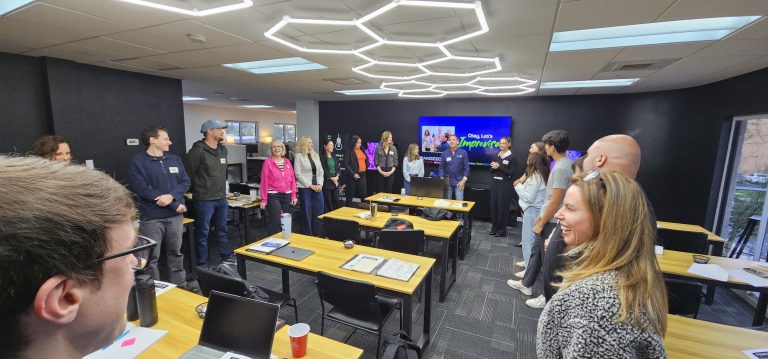
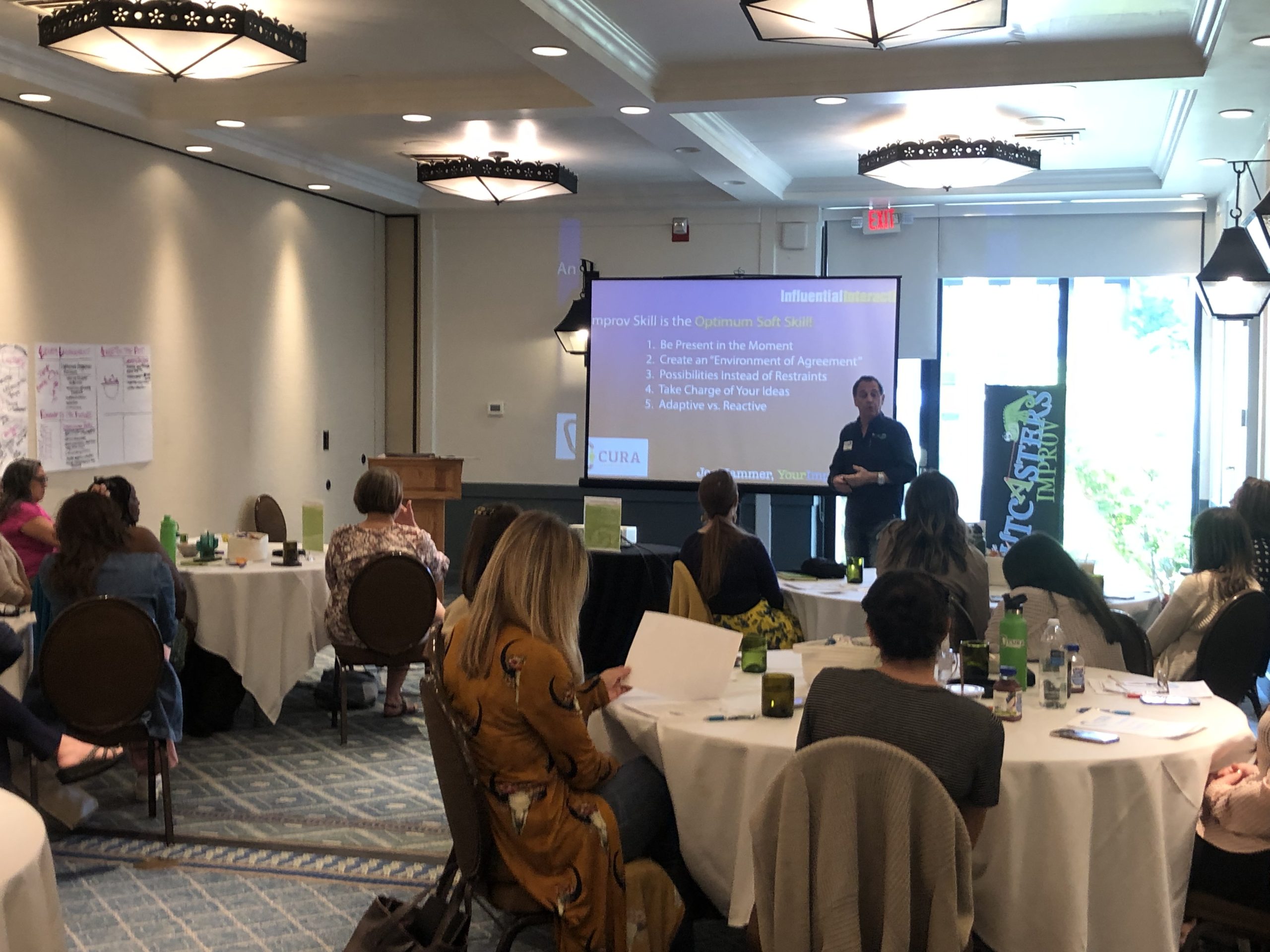
That is why active, business-focused learning is so valuable. Teams can rehearse how to clarify a vague objection, redirect a personal comment, listen for the concern beneath a demand, and summarize a decision when several priorities collide. The practice may be engaging, but the outcome is serious: better conversations when customers, deadlines, budgets, and reputations are on the line.
Your Improv Coach builds this kind of practical communication practice into leadership and team programs, helping participants develop composure, listening, and collaborative problem solving they can use immediately in meetings and presentations.
The next time a conversation starts getting tense, resist the urge to shut it down just because it is uncomfortable. Slow the exchange, name the decision, ask for the evidence, and keep the focus on the work. A team that can disagree with discipline is not harder to lead. It is far more capable of doing its best work.

About the author
Joe Hammer is a Scottsdale-based corporate improv trainer who has worked with businesses since 1989. As founder of The Outcasters Improv Training Center and YourImprovCoach.com, he runs hands-on workshops for conferences, team building and communication skills nationwide. He is also the author of The Improv Edge.