7 Improv Exercises for Business Teams That Work
A client changes the scope halfway through a meeting. A leader gets a difficult question they did not expect. Two departments arrive with competing priorities and no obvious answer. These are not performance-comedy problems. They are daily business realities – and well-designed improv exercises for business teams give people a practical place to rehearse their response.
The point is not to make employees funnier or put introverts on the spot. It is to help people listen closely, communicate clearly, contribute ideas without overthinking, and stay composed when the plan changes. The best exercises feel active and enjoyable, but they also reveal the habits that affect meetings, customer conversations, presentations, and decision-making.
For HR leaders, department heads, and event planners, the key is choosing activities that match a business outcome. A quick energizer has value at an offsite. A deeper exercise that exposes assumptions may be more useful for a leadership team facing change. Here are seven options that create real practice, not just a pleasant break from the agenda.
1. One-Word Story for Shared Attention
Ask the group to build a story one word at a time. Each person contributes only a single word, then passes the turn to the next person. Keep the story moving for a minute or two. The goal is not a polished narrative. The goal is collective focus.
Participants quickly learn that they cannot plan their contribution three turns ahead. They have to hear what was just said, notice where the story is going, and add something that supports momentum. That is the same discipline required when a colleague is explaining a problem, a customer is raising a concern, or a meeting takes an unexpected turn.
Afterward, ask what made the story easy or difficult to build. Teams often identify familiar workplace habits: waiting to speak instead of listening, trying to control the outcome, or dismissing an idea before it has a chance to develop. This exercise works especially well as an opening activity because it establishes attention without requiring anyone to give a speech.
2. The Changed-Plan Meeting
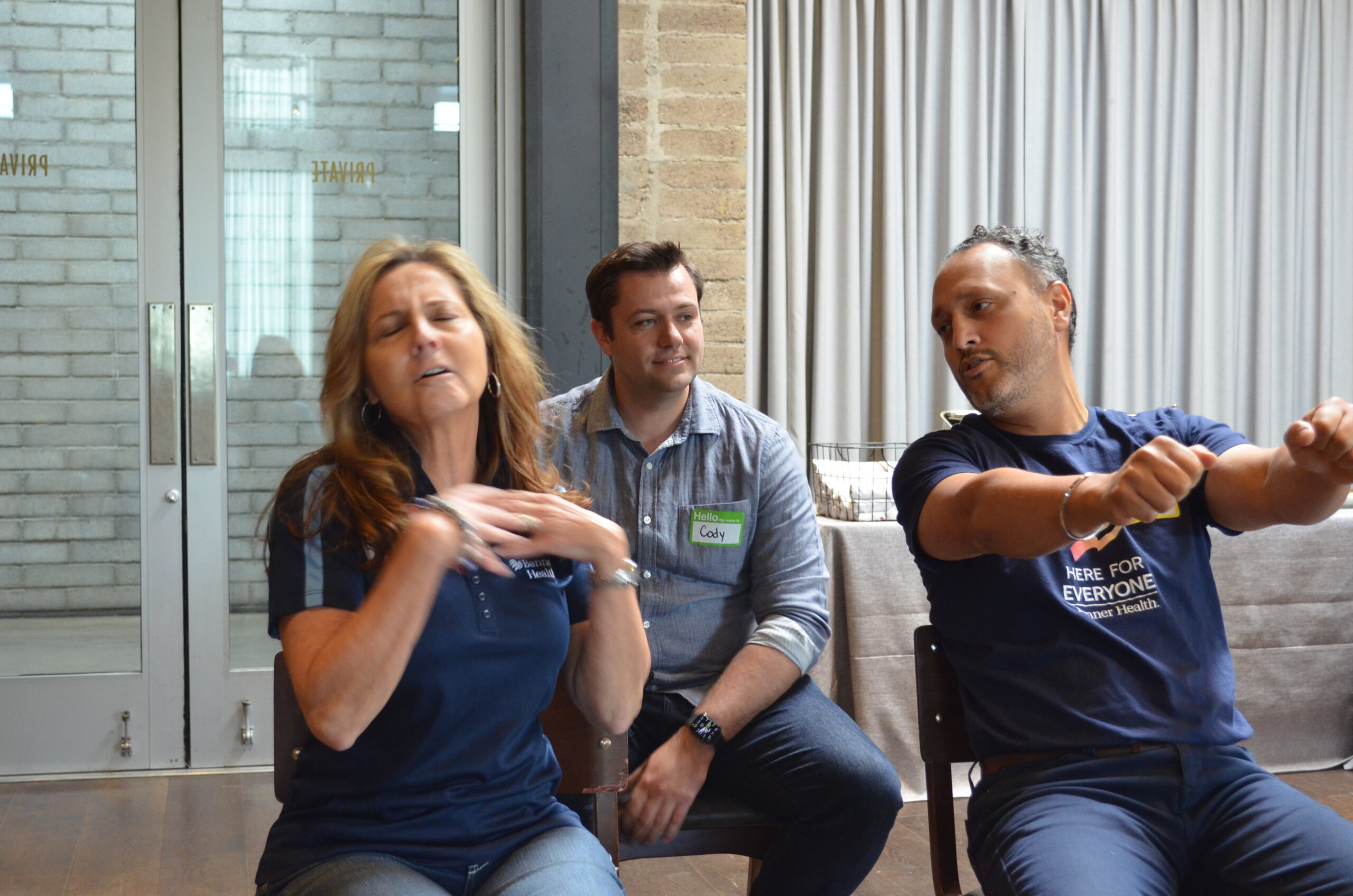
Divide participants into small groups and give each group a simple, familiar scenario: planning a product launch, preparing for a client meeting, or organizing an internal event. Let them discuss their plan for a few minutes. Then introduce a change: the budget is reduced, the deadline moves up, a key stakeholder objects, or a customer requests a different result.
The group must continue the conversation and revise its approach in real time. Make the change relevant enough to create pressure, but not so complicated that the activity becomes a strategy exercise. What matters is watching how people respond when certainty disappears.
Some teams freeze. Others rush to defend the original plan. Stronger groups acknowledge the new information, clarify what matters most, and move toward a useful next step. That creates an excellent debrief on adaptability, leadership presence, and communication under pressure. For managers, it also surfaces whether people feel safe raising concerns before a situation becomes urgent.
3. Listen, Repeat, Build
Pair participants. Partner A makes a straightforward business statement, such as, “Our customer is frustrated because the rollout date changed.” Partner B repeats the statement in their own words, then adds one constructive question or observation. Partner A responds by first recognizing what they heard before advancing the conversation.
This sounds simple, which is exactly why it is revealing. In many workplaces, people respond to the part of a message that supports their existing position. They solve before they understand. They interrupt with context. They hear a complaint and immediately explain why the issue occurred.
The exercise slows the exchange down long enough to practice accurate listening. It is particularly valuable for customer-facing teams, cross-functional groups, and leaders who need to manage difficult conversations. The trade-off is pace: this is not the right activity for a large conference room with ten minutes to spare. In a workshop setting, however, it gives participants a repeatable communication habit they can use that afternoon.
4. Status Update Without Slides
Give each participant 60 seconds to deliver a status update on a fictional project. Halfway through, add a prompt: the executive wants the bottom line first, the project is now at risk, a partner needs reassurance, or the audience has no background on the issue. The speaker must adjust immediately.
This exercise builds presentation flexibility. Many professionals prepare well for the version of a conversation they expect. The challenge arrives when the audience needs something different from what they prepared. Can the speaker reorganize their message? Can they remain clear and credible without retreating into jargon or a script?
For leadership teams, this is useful practice for board updates, town halls, and high-stakes meetings. For emerging professionals, it develops confidence without demanding perfection. Keep feedback concrete: Was the main message clear? Did the speaker address the new need? Did their pace and tone help the audience stay with them? Feedback framed around observable behavior is far more useful than telling someone to “be more confident.”
5. The Constraint Challenge
Give small groups a workplace problem and one limiting condition. They might need to reduce service delays with no additional headcount, improve a handoff between departments without adding meetings, or communicate a policy change to a skeptical team. Give them five minutes to generate options, then ask them to present the most workable idea.
Constraints are not a gimmick. They mirror the reality of business decisions, where time, budget, information, and authority are rarely unlimited. The exercise shifts teams away from the easy answer – asking for more resources – and toward resourceful thinking.
This activity is most effective when the problem is connected to a genuine organizational challenge, though it should not become a public critique of a struggling department. Use a neutral scenario if trust is still developing. If leaders want practical output from the session, use a real but appropriately scoped issue and capture the strongest ideas for follow-up.
6. The Expert Handoff
Create groups of three. One person begins explaining a topic or proposal. At any point, a facilitator calls for a handoff, and the next person must continue with a clear transition. The new speaker cannot simply repeat the previous point or start over. They must show that they understand the thread and move it forward.
The business application is immediate. Teams regularly hand off conversations between sales and delivery, managers and subject-matter experts, or one department and another. A weak handoff creates confusion, duplication, and lost trust. A strong handoff makes the customer or stakeholder feel that the team is aligned.
This is also a useful exercise for conference panels and leadership presentations, where multiple speakers need to sound coordinated rather than disconnected. It works best when the topic is simple enough for everyone to participate, but close enough to work responsibilities that the communication stakes feel real.
7. The Unexpected Question Round
Ask one participant to present a brief recommendation, project update, or proposed solution. Other participants then ask reasonable but unplanned questions: What is the risk? Who needs to approve this? What happens if the timeline slips? What evidence supports the recommendation? The presenter practices responding with calm, clarity, and honesty.
The goal is not to trap the speaker. It is to replace the fear of not having a perfect answer with a more professional response. A leader can acknowledge what is known, clarify what needs confirmation, and explain the next step without losing credibility. That distinction matters in executive meetings, client presentations, and moments of change.
Use this exercise with care. Psychological safety matters. Start with lower-stakes topics, model respectful questions, and make feedback supportive and specific. When done well, it helps teams become less defensive and more capable in the conversations they cannot fully rehearse.
How to Make Business Improv Practice Stick
A single activity can shift the energy in a room. Lasting behavior change requires a tighter connection between the exercise and the work. Before choosing an activity, identify the business moment people need to handle better: listening during conflict, responding to customer objections, presenting without overrelying on slides, or making decisions when facts are incomplete.
Then leave time to debrief. Ask participants what happened, what they noticed in themselves, and where the same behavior shows up at work. Without that conversation, an exercise can be memorable but disconnected. With it, people begin to recognize a practical choice they can make in their next meeting.
For a team that needs more than a quick activity, customized facilitation makes a difference. Joe Hammer designs experiential programs around real communication challenges, so participants practice skills that matter after the room clears. The right level of challenge depends on the group, its trust level, and the pressure it faces.
The most useful exercise is the one that gives people a better response when the next conversation does not go according to plan. Give them room to practice that response before the stakes are high.
Want your team running these exercises with Joe Hammer of The Outcasters Training Center instead of a slide deck? See The Outcasters’ corporate improv training programs and request a free workshop consultation!

As founder of The Outcasters Improv Training Center and YourImprovCoach.com, Joe Hammer has spent years helping forward-thinking organizations build real skills in listening, collaboration, and adaptability under pressure through interactive, improv-based training. His engagements often open with a high-energy presentation on using principles of improv in effective business communication, a great way to set the tone at a conference, offsite, or leadership summit, before teams move into hands-on training.