Manager Communication Skills Guide for Leaders
A manager can have the right strategy, the right data, and the right intentions – then lose the room with one vague sentence. “Let’s make this a priority” may sound decisive, but a team leaves wondering who owns the work, what changes first, and when the answer is due. That gap is where missed deadlines, frustrated employees, and unnecessary escalation begin.
This manager communication skills guide is built for leaders who need more than polished talking points. They need communication habits that keep work moving when priorities shift, pressure rises, and people do not immediately agree. The goal is not to sound perfect. It is to be understood, trusted, and useful in the moments that count.
Clear communication starts before the conversation
Most communication problems are not caused by a lack of words. They are caused by a lack of preparation. A manager enters a meeting knowing the outcome they want, but has not decided what the team needs to know, what decision is actually on the table, or what can still be influenced.
Before a one-on-one, project update, performance conversation, or leadership meeting, get specific about three things: the purpose of the conversation, the decision or action needed, and the next step. This does not require a script. It requires enough clarity to avoid thinking out loud at the team’s expense.
For example, “We need to improve customer response time” is a topic. “By Friday, we will identify the two biggest delays in our response process and assign owners to test a fix next week” gives people a destination. It creates focus without pretending every detail is settled.
Good managers also name the level of certainty. If a decision is final, say so. If it is a proposal, say that. If senior leadership has not made a call, do not package uncertainty as confidence. Teams can handle change better than they can handle mixed signals.
Listen for meaning, not just updates
Managers often believe they are listening because they let someone finish speaking. But listening that changes outcomes goes further. It means noticing what was said, what was avoided, and what the speaker may need from you.
When an employee says, “I’m concerned about the deadline,” the easy response is to explain why the deadline cannot move. A stronger response starts with curiosity: “What is creating the risk?” The answer may reveal a staffing issue, unclear approval process, missing information, or a concern that has been building for weeks.
Active listening is practical leadership, not a soft extra. It helps managers catch problems early, make better decisions, and show employees that raising an issue will lead to a productive conversation rather than a quick dismissal.
Use questions that move work forward
The best questions do not turn every discussion into an interrogation. They create clarity. Ask, “What does success look like from your perspective?” when expectations are unclear. Ask, “What have you already tried?” before jumping to a solution. Ask, “What is the one decision you need from me?” when a conversation becomes broad and tangled.
Then reflect back what you heard in plain language. “So the issue is not the client request itself. It is that we do not have a clear owner for the approval.” This gives the employee a chance to correct your understanding and signals that you are paying attention.
A useful pause can be just as valuable as a sharp question. Managers do not need to fill every silence. When someone is working through a difficult concern, a few seconds of room can produce the information that a rushed response misses.
Give direction people can act on
Employees cannot execute ambiguity, even when they are talented and committed. Direction becomes useful when it answers the practical questions: What are we doing? Why does it matter? Who owns what? What does done look like? When will we check progress?
This is especially critical during change. A reorganization, new client demand, delayed launch, or staffing change may require managers to communicate before every answer is available. In those moments, avoid either extreme: withholding information until everything is resolved or sending a stream of partial updates that create more confusion.
Share what is known, acknowledge what is still being worked out, and establish when the team can expect another update. That rhythm builds confidence. It tells people they will not be left to invent their own version of the plan.
The same standard applies to feedback. “Be more strategic” is not feedback an employee can use. “In the next client review, lead with the business impact before walking through the details” is specific, observable, and coachable. Strong feedback addresses behavior and impact, then makes the next attempt easier to picture.
Handle difficult conversations without going vague or cold
Avoided conversations do not disappear. They show up later as resentment, lowered performance, turnover, or conflict between team members. Managers need the ability to address problems directly while protecting dignity.
Start with facts rather than labels. Instead of “You have been unreliable,” describe the pattern: “The last two reports were submitted after the agreed deadline, and the team had to delay its review.” Explain the impact, ask for the employee’s perspective, and agree on a clear path forward.
The tone matters, but clarity matters more. Being kind does not mean cushioning the message until it becomes unrecognizable. Being direct does not mean being harsh. The most effective managers can say, “This needs to change,” without making the conversation personal or humiliating.
There is a trade-off here. A highly urgent situation may call for concise direction in the moment, followed by a fuller discussion later. A complex performance issue may require more time, documentation, and coordination with HR. Good judgment means matching the conversation to the stakes rather than using the same approach every time.
Communicate calmly when the plan changes
Pressure reveals a manager’s communication habits. When a client changes direction in the middle of a presentation, a system fails before a deadline, or leadership requests a last-minute revision, teams look to their manager for cues. Panic spreads quickly. So does composure.
Composure is not pretending nothing is wrong. It is acknowledging reality without turning uncertainty into chaos. Say what has changed, identify the immediate priority, and invite the right people into problem solving. “The client has shifted the scope. Our first job is to confirm the new requirements and identify what affects tomorrow’s delivery. Let’s separate facts from assumptions before we assign work.”
That kind of response gives a team traction. It keeps people from defending old plans while the situation has already moved on. It also models a critical leadership skill: responding instead of reacting.
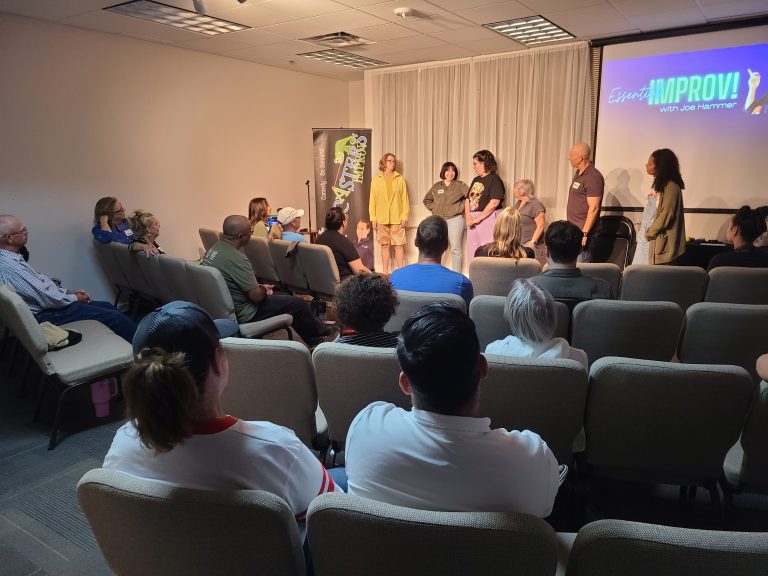
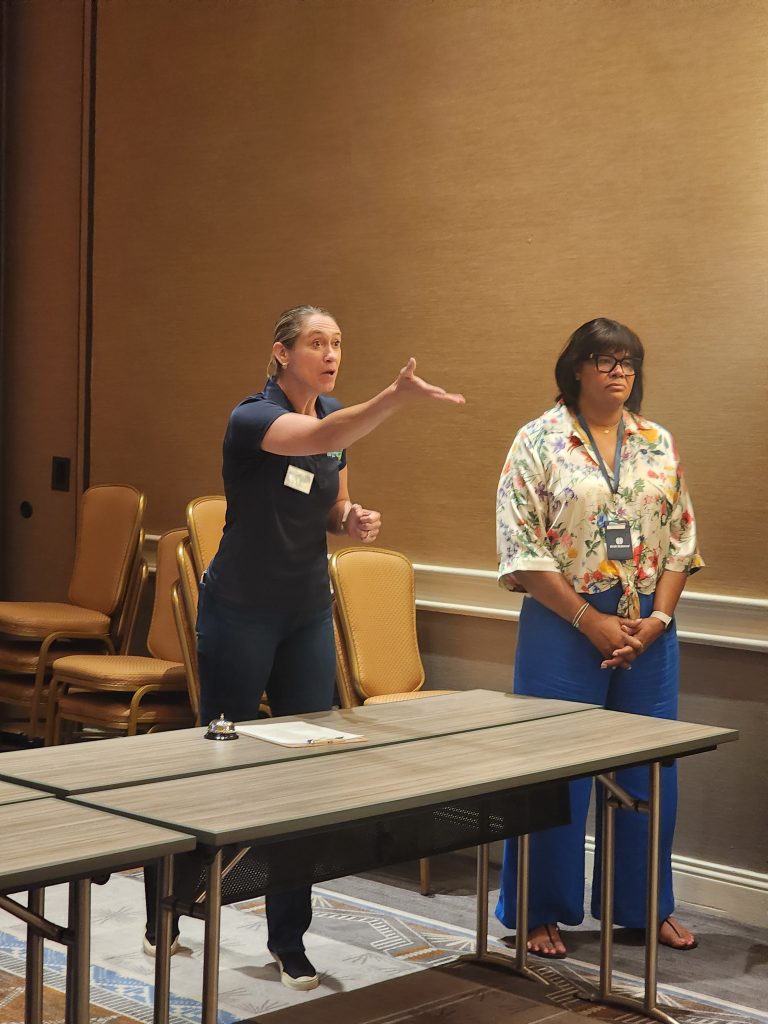
Interactive practice is especially valuable here because communication under pressure is physical and behavioral, not just intellectual. Managers can understand the value of listening, flexibility, and clear direction in a conference room. They build confidence when they practice those behaviors in realistic, fast-moving situations and receive useful feedback.
Create meetings that produce decisions
Meetings are one of the clearest tests of a manager’s communication. If people leave unsure what was decided, who owns the next action, or why they were there, the issue is not meeting fatigue. It is meeting leadership.
Open with the outcome needed. A project update may require alignment, a decision, or problem solving. Those are different meetings. Name the purpose so people can contribute in the right way.
During the conversation, keep the group connected to that outcome. If a useful side issue appears, capture it and decide whether it needs its own discussion. This is not about shutting down ideas. It is about respecting attention and making sure important ideas do not get buried under unrelated detail.
Close with a verbal recap: the decision, the owner, the deadline, and any open question. Written follow-up helps, but it should confirm clarity, not rescue a confusing conversation.
Build a communication culture, not a manager bottleneck
A manager should not become the only person who can clarify priorities, resolve tension, or communicate with confidence. The strongest teams build shared habits. People ask better questions, surface concerns early, give each other usable feedback, and speak up when a plan no longer fits the facts.
That requires managers to model the behavior they want. If leaders interrupt, employees will withhold. If leaders punish bad news, teams will delay it. If leaders explain decisions clearly, invite informed input, and follow through on commitments, those habits become part of how the team operates.
For HR and learning leaders, this is why communication training works best when it is active and tied to real workplace moments. A passive lecture may create awareness. Practice creates recall when the stakes are real. Influential Interactions training from Your Improv Coach are designed around that difference: practical communication behaviors that people can use in meetings, presentations, customer conversations, and leadership moments immediately.
The next conversation is not a test of whether you can say everything perfectly. It is a chance to help another person see the situation clearly, take the right action, and trust that even when the plan changes, the team can move forward together!

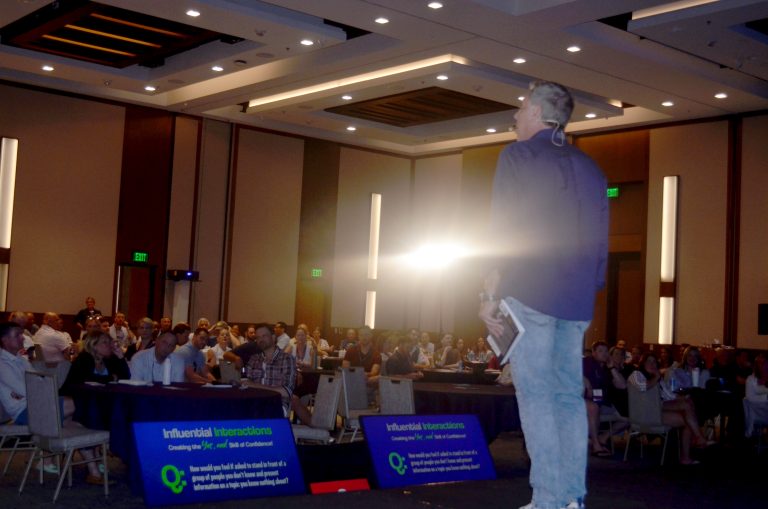
As founder of The Outcasters Improv Training Center and YourImprovCoach.com, Joe Hammer has spent years helping forward-thinking organizations build real skills in listening, collaboration, and adaptability under pressure through interactive, improv-based training. His engagements often open with a high-energy presentation on using principles of improv in effective business communication, a great way to set the tone at a conference, offsite, or leadership summit, before teams move into hands-on training.